Buying litter in bulk can lower reorder costs, but the lowest price per bag does not always mean the best value. Cassava Cat Litter is made from a plant-based material, so buyers should compare product specifications rather than assume every formula performs alike. Check the stated weight, particle size, clumping guidance, packaging, and storage recommendations. Small details matter.
The market is growing, though headline figures need context. Grand View Research estimated the global cat litter market at about US$5.08 billion in 2023 and projected continued growth through 2030. Its estimate covers multiple litter types, not cassava alone. The American Pet Products Association reported US pet-industry spending of US$152 billion in 2024; that broad figure shows the scale of pet care, but does not measure litter sales specifically. Read such reports as market context, not proof that one product will suit every household.
For wholesalers, retailers, shelters, and multi-cat homes, a bulk order also creates practical questions. How long will the stock last? Can the bags stay dry and sealed? Is the supplier’s batch information clear? Ask for current product documents, order samples where possible, and calculate cost per usable kilogram alongside delivery fees. Then assess odor control, dust, and tracking in real conditions. Results may vary. A careful buying plan helps reduce waste, avoid storage surprises, and judge whether a larger order truly fits your needs.
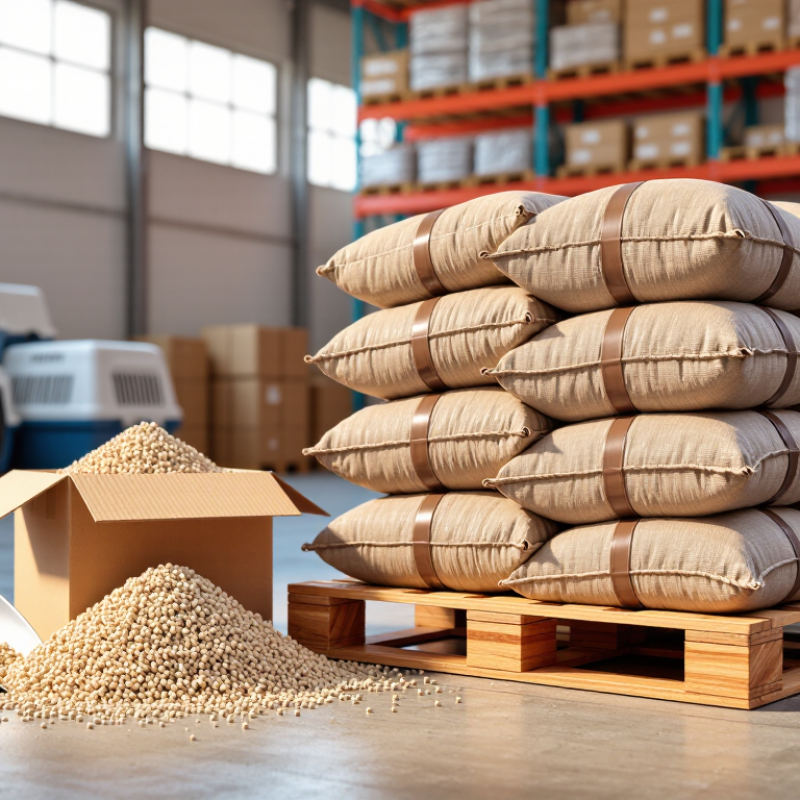
Bulk buying should start with a measured month, not a pallet estimate. Track bags opened and litter used for four weeks, including full tray changes and top-ups. Multiply that monthly amount by the number of months you want between orders. APPA’s 2023–2024 National Pet Owners Survey estimates that 46.5 million U.S. households own cats, but household counts cannot predict one cat’s litter use. Your own tracking matters more.
Then cap the order by the product’s labeled shelf life and your actual storage space. Cassava litter products may have different storage guidance, so check the package rather than assuming an opened bag keeps indefinitely. Measure a dry cupboard or shelf, including its usable height; keep bags sealed and away from damp floors, sinks, and plumbing. That estimate can wobble. A modest 10% buffer may cover a delayed delivery, but only if the extra bags fit and can be used before the stated date. If your cat’s routine changes, review the next order instead of repeating last month’s quantity automatically.
Bulk pricing can hide meaningful changes between production runs. Before ordering a pallet, request batch-level data for bulk density, moisture, particle size, and dust. A single average is not enough. Ask how each figure was measured and whether the same method was used across batches. Small details matter.
Compare density in kilograms per cubic meter, rather than judging a bag by hand. Large shifts can affect storage space and how litter pours. Check moisture readings against the supplier’s stated range; excess moisture may contribute to clumping in storage. Particle-size data should show the spread, not just an average. A sample with many fines can behave differently from one with mostly even granules. Dust results are useful only when the testing method stays consistent. Not always easy.
Keep the batch reports beside your receiving notes. Record the date, lot number, bag condition, and any visible differences, such as powder collecting at the bottom. If possible, inspect a small shipment before committing to a larger order. My checklist is not perfect: handling during transport can also change what you see. Still, comparing several batches gives a more dependable picture than relying on a polished product description.
When buying cassava cat litter in bulk, treat “compostable” as a testable claim, not a disposal promise. EN 13432 sets a 90% biodegradation threshold within six months under controlled composting conditions. The standard was designed for packaging, so ask whether the test covered the litter itself or only its packaging. Request the certificate, test method, and precise product name. A vague logo is not enough. The European Bioplastics market update also distinguishes industrially compostable materials from materials suited to home composting; the two are not interchangeable.
Tip
Check the fine print before ordering a pallet. Look for the test laboratory, certification scope, and composting conditions. Ask whether the product was tested as supplied, including any clumping agents or fragrance. Then confirm that a local composting facility accepts it. Cat waste can raise pathogen concerns, so do not assume used litter belongs in a garden compost pile. That detail is easy to miss.
Bulk buying also magnifies storage mistakes. Keep unopened bags dry, off concrete floors, and away from humid laundry rooms; cassava-based granules can absorb moisture and clump in the bag. Start with a small order and inspect several bags for dust, odor, and consistent granule size. One imperfect batch can create weeks of cleanup. I would still ask for a recent test report, not just a sales sheet.
Sources: EN 13432; European Bioplastics, Bioplastics Market Development Update.
Buying cassava cat litter by pallet makes packaging tests worth reviewing before a large order. Ask for the test report, not just a claim that packaging was “tested.” ASTM D4169 provides a framework for evaluating shipping units under selected distribution hazards. The chosen distribution cycle and assurance level should resemble the expected route. A test result is meaningful only when the sample, pallet pattern, and packaging match the shipment you plan to receive.
ASTM D5276 evaluates filled containers through free-fall drops. For bagged litter, inspect seams, closures, and corners afterward; note any tears, leaks, or crushed bags.
D4169 can help assess a broader sequence of handling and transport stresses, while pallet-load checks can reveal shifting or unstable layers. Ask whether the test used the actual bag size and pallet configuration.
Small gaps matter. A report cannot predict every warehouse floor, truck vibration, or rainy unloading dock. Real routes vary. Keep photos and inspection notes from your first deliveries, then compare them with the lab findings.
If the bags arrive intact but the pallet leans, the test setup may need a closer look. That’s easy to miss.
When comparing bulk cassava cat litter, look beyond the pallet price. Calculate delivered cost per usable kilogram: product cost, freight, unloading fees, and storage, divided by the dry litter you can actually use. For example, 500 kilograms priced at $600 cost $1.20 per kilogram before delivery. Add $140 freight and $30 unloading, and the rate rises to $1.54. These figures are illustrative. Check whether the quote includes appointment or liftgate fees, and confirm net product weight rather than relying only on bag count. Small details matter.
Storage matters. Cassava litter can absorb moisture, so check that your space is dry and has room for raised pallets. If storing 500 kilograms costs $40 monthly for two months, add $80 to the order, bringing this example to $1.70 per kilogram. Even a spare room has a cost if it blocks useful space. Compare that total with a smaller, more frequent delivery. Estimate monthly use from household routines, then avoid ordering more than you can store properly. I still find storage costs easy to overlook. Keep the freight quote, invoice, and delivery notes together; actual charges can differ from an early estimate.
Illustrative cost breakdown by order size (USD per kg)
In this modeled example, larger orders reduce product and freight costs per kilogram, while storage costs rise. The figures are illustrative assumptions, not supplier quotations; compare written quotes and include your actual freight, storage duration, and usable delivered quantity.
Track bags opened, litter used, top-ups, and full tray changes for four weeks. Multiply that amount by the months between orders. One month can mislead.
Household statistics cannot predict one cat’s litter use. Your own bag count is more useful. Habits vary.
Check the package for storage guidance and any stated date. Buy only what you can use before then. Don’t assume an opened bag lasts indefinitely.
Measure the cupboard or shelf’s usable height and floor space. Keep sealed bags away from damp floors, sinks, and plumbing. Tight spaces can fool you.
A modest 10% extra may help if delivery is delayed. Add it only when the bags fit and remain usable. Otherwise, skip it.
Check that the sample, bag size, pallet pattern, and packaging match your planned shipment. A vague “tested” claim is not much to go on.
ASTM D4169 evaluates shipping units under selected distribution stresses. ASTM D5276 examines filled containers dropped from a specified height. Different tests reveal different weaknesses.
Look for torn seams, leaking bags, crushed corners, and shifting layers. Take photos and keep notes. A leaning pallet matters, even when bags look intact.
Buying Cassava Cat Litter in bulk works best when the order matches your household’s actual needs. Estimate monthly use, then consider how long the litter can be stored and how much dry, protected space you have. Before choosing a supplier, compare product data across batches, including bulk density, moisture, particle size, and dust levels. Consistent measurements can help you assess whether deliveries are likely to perform reliably.
Review compostability claims carefully and check whether they are supported by testing against EN 13432’s 90% biodegradation benchmark. For palletized orders, ask about packaging tests such as ASTM D4169 and ASTM D5276 to understand how products are evaluated during transport and handling. Finally, compare the delivered cost per kilogram rather than the listed product price alone, including freight and any storage costs. These checks can help you select a bulk order that fits your budget, space, and usage.