Recommended Plant-Based Cat Litter SKUs
Explore our SGS-verified, CE compliant tofu and cassava pellet formulas designed for global private label distribution.
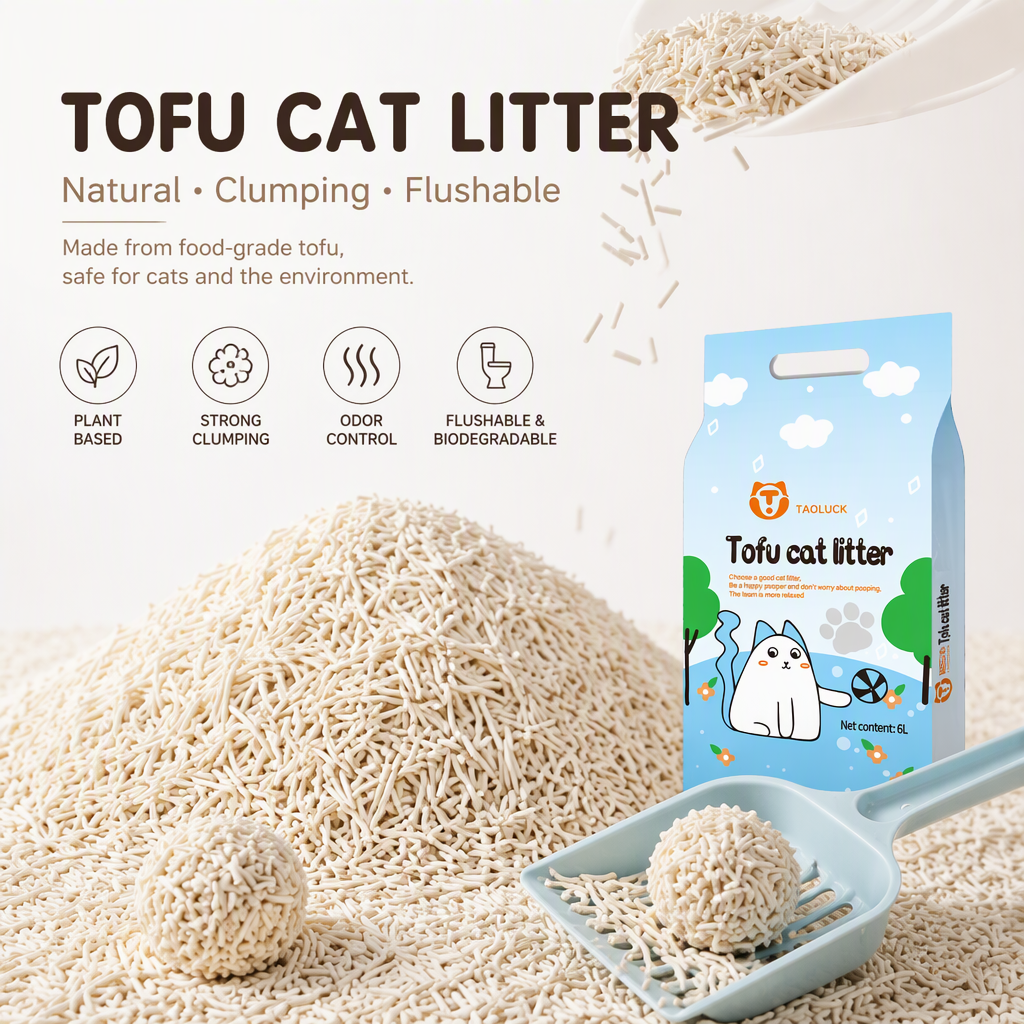
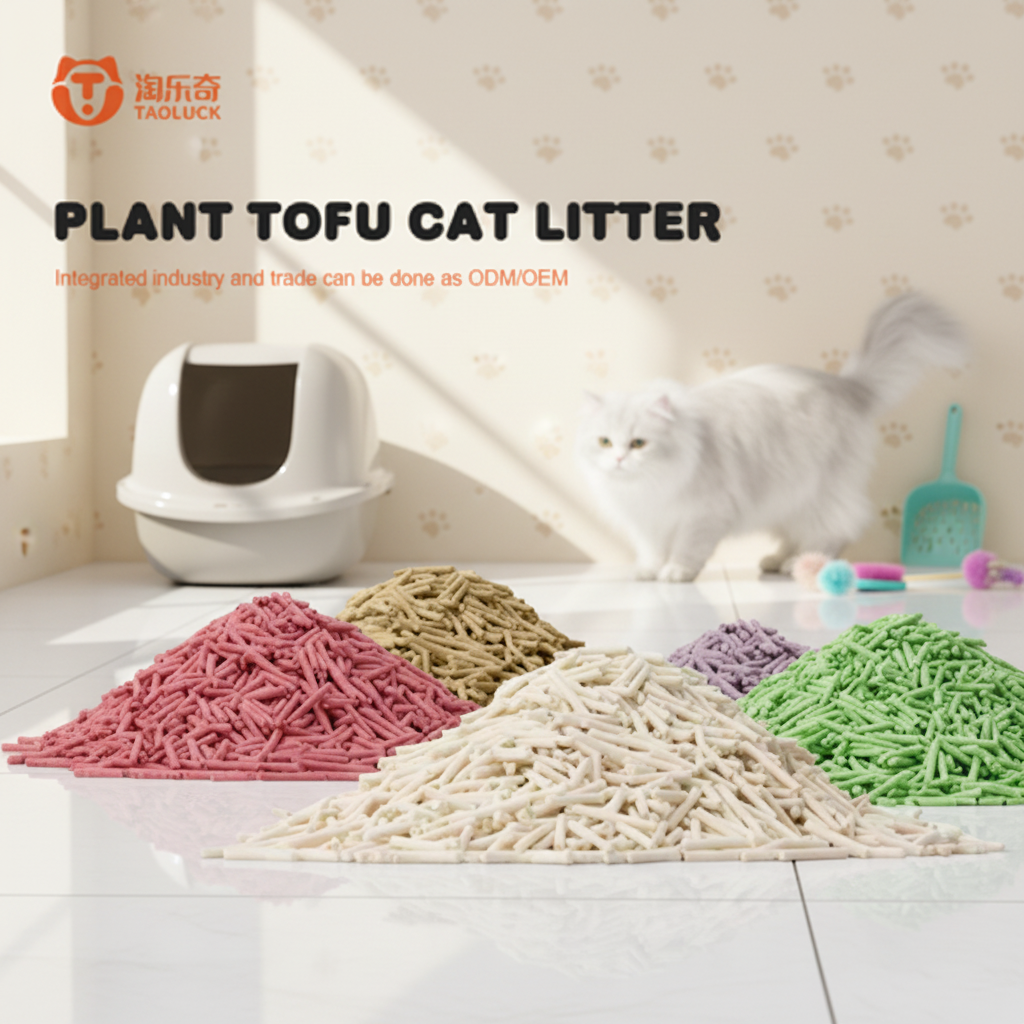
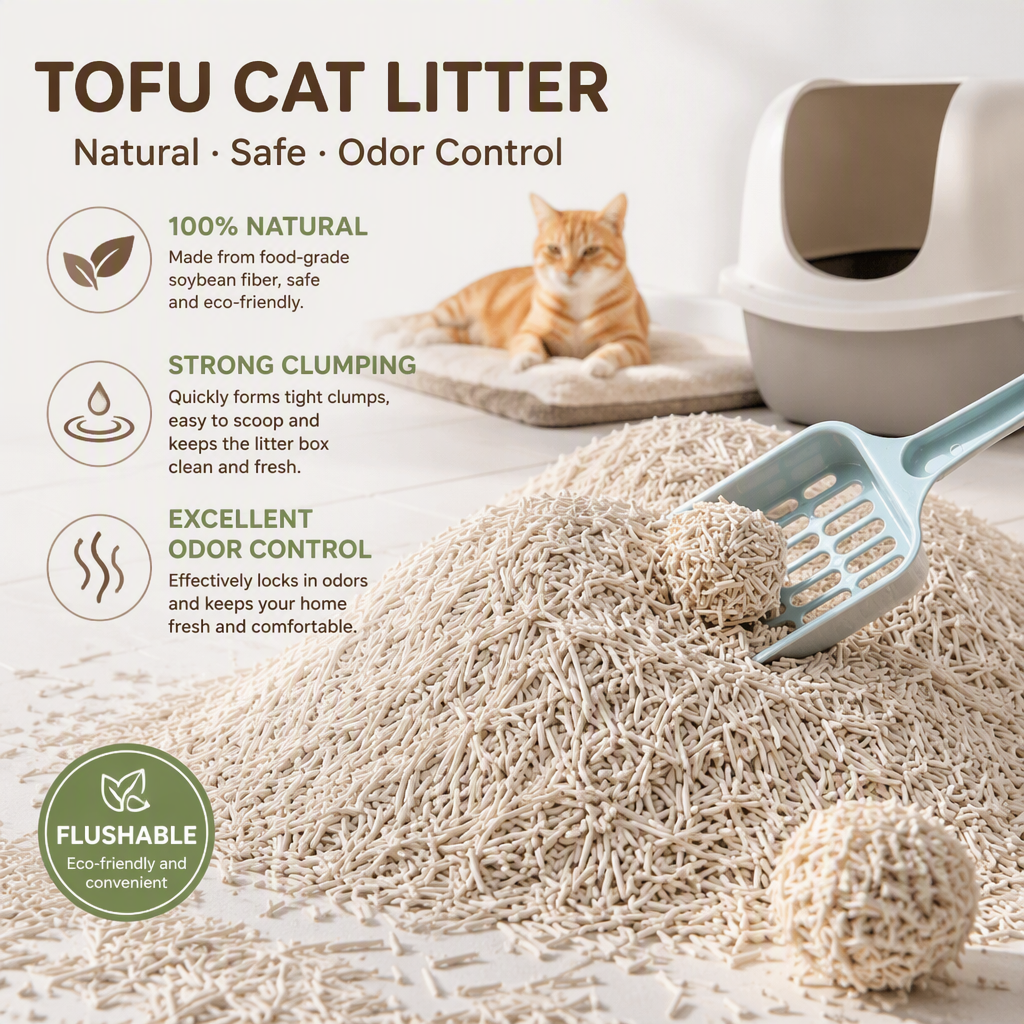
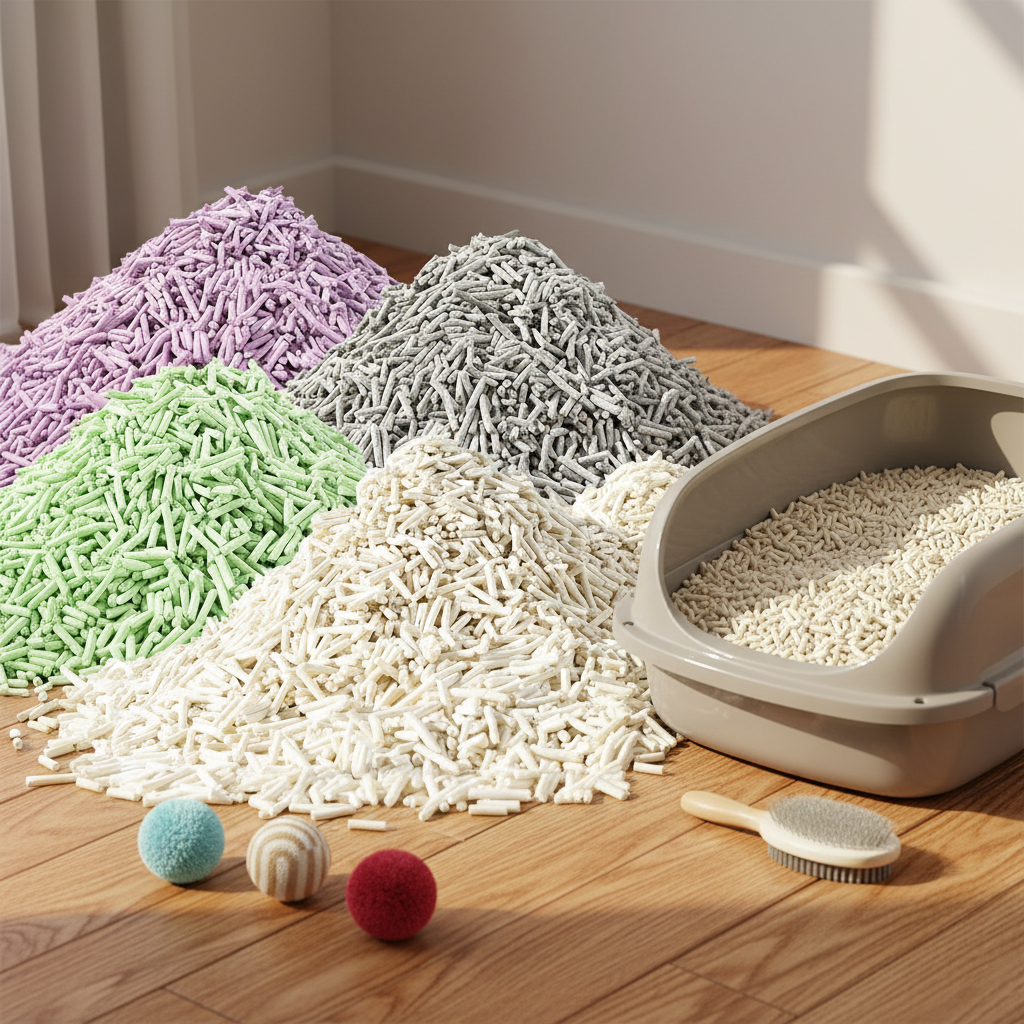
Executive Technical Summary: The Strategic Transition to CE Certified Tofu Litter
The global pet hygiene sector is undergoing a structural realignment. Traditional sodium bentonite and silica crystal cat litters, while historically dominant, are facing heightened environmental scrutiny, regulatory restrictions regarding landfill disposal, and increasing consumer concern regarding respiratory dust hazards (crystalline silica). In response, international procurement managers, pet care brands, and hypermarket distributors are shifting purchase orders toward CE Certified Tofu Pellet Litter Manufacturers and Suppliers who deliver high-performance, plant-based alternatives.
Tofu cat litter—engineered primarily from food-grade soybean residue (okara), pea fiber, and natural botanical starches—represents a sophisticated bio-mechanical hygiene substrate. When manufactured under strict CE standards and audited quality management protocols, tofu litter provides an optimal convergence of fast liquid clumping, total bio-degradability, low bulk weight, and absolute non-toxicity for domestic felines.
Bio-Mechanical Engineering of Tofu Granules: Raw Material Matrix & Cross-Linking
The core structural integrity and performance metrics of plant-based pellet litter depend directly upon precise starch-protein matrix formulation. Superior manufacturing requires balancing structural density with capillary absorption velocity:
- Food-Grade Okara & Pea Fiber Substrate: Serving as the primary fibrous scaffolding, pea and soybean curd fibers supply high capillary suction. High-grade pea fiber is preferred by premium manufacturers for its bright white aesthetic and superior tensile strength during extrusion.
- Starch Gelatinization & Binder Integration: Corn starch and food-grade tapioca starch act as thermal adhesives. During high-temperature screw extrusion (ranging from 85°C to 110°C), starch molecules undergo complete gelatinization, forming a durable binder network that prevents pellet disintegration during ocean transit.
- Natural Anti-Microbial & Deodorizing Agents: Premium formulas integrate micro-encapsulated natural enzymes, activated carbon particles, or plant polyphenol extracts. These additives actively neutralize ammonium ions ($NH_4^+$) and trimethylamine, stopping foul odor creation at the molecular level rather than merely masking it with heavy synthetic scents.
3-Second Clump Lock
Super-absorbent starch chains pull liquid instantly into a tight, consolidated clump that will not break when scooped.
Dust-Free Vacuum Screening
Quadruple negative-pressure dust extraction ensures minimal airborne particles (<0.1%), protecting feline respiratory tracts.
Municipal Toilet Flushable
Rapid water dispersion breaks clumps down completely within 60 seconds upon submersion, allowing easy municipal waste disposal.
CE Certification Compliance & European Safety Benchmarks
For international buyers sourcing from Asia, European Conformity (CE) marking along with SGS verification serves as an essential compliance filter. In the pet care product industry, CE certification and associated European standard compliance verify that the plant-based litter meets rigorous safety, health, and environmental requirements:
- REACH & SVHC Chemical Safety Screening: CE compliant tofu litter is rigorously tested to ensure complete absence of Substances of Very High Concern (SVHC), including formaldehydes, heavy metals (Lead, Cadmium, Mercury, Chromium VI), and toxic synthetic binder residues.
- Mycotoxin & Aflatoxin Verification: Because raw soybean and corn starches can harbor fungal toxins if improperly handled, verified manufacturers run mandatory ELISA or HPLC testing to guarantee zero Aflatoxin B1 contamination in stored raw ingredients.
- Crushing Resistance & Mechanical Durability: Standardized hardness testing requires pellets to sustain static loads exceeding 98% hardness rating without breaking down into dust. This ensures zero degradation during container loading, sea transport, and retail shelf handling.
Substrate Technical Comparison Matrix for OEM Buyers
Evaluating substrate properties is critical when engineering a product line tailored to target consumer preferences and pricing tiers:
| Performance Parameter | Standard Tofu (3.0mm Strip) | Micro-Pellet Tofu (1.5mm / 2.0mm) | Cassava-Starch Granules | Tofu-Bentonite Hybrid Blend |
|---|---|---|---|---|
| Primary Base Material | Soybean Pulp & Corn Starch | Refined Pea Fiber & Starch | 100% Cassava Root Fiber | 70% Tofu + 30% Sodium Bentonite |
| Water Absorption Speed | < 5 Seconds | < 3 Seconds | < 2 Seconds | < 4 Seconds |
| Clump Hardness (Static Load) | High (Firm) | Very High (Dense) | Ultra-Hard (Clay-like) | Maximum Hardness |
| Dust Index Ratio | < 0.15% | < 0.10% | < 0.05% | < 0.40% |
| Flushability Rating | Excellent (Instant Dissolve) | Excellent (Fast Dissolve) | Moderate (Small Clumps Only) | Non-Flushable (Contains Clay) |
| Target Retail Positioning | Mass Retail & Standard OEM | Premium Urban E-Commerce | Ultra-Premium Eco-Brands | Clay-to-Plant Transition Line |
Enterprise Infrastructure: Dongying Brumel Pet Products Co., Ltd.
As an SGS on-site verified OEM/ODM manufacturer headquartered in Dongying, Shandong Province, Brumel operates a 7,500 square meter integrated manufacturing facility. We specialize in custom formulation, private label packaging design, and high-efficiency export logistics for global partners.
- SGS On-Site Audited Plant with Full Inspection Traceability
- Extrusion Lines Supporting 1.5mm, 2.0mm, and 3.0mm Pellet Diameters
- Custom Scent Encapsulation: Peach, Milk, Green Tea, Lemon, Lavender
- Flexible Private Label MOQ Starting from Just 400 Bags
Future Procurement Trends & Sourcing Outlook (2026–2030)
Procurement teams developing long-term product roadmaps should align their sourcing strategies with upcoming market developments:
1. Shift Toward Micro-Pellet Extrusion (1.5mm & 2.0mm Diameters)
Standard 3.0mm tofu pellets, while effective, consume more raw material per clump. Market demand is transitioning rapidly toward 1.5mm micro-pellets. These finer diameters create smaller inter-granule voids, drastically reducing urine penetration depth to the litter box floor. This results in thinner, flat surface clumps, cutting overall litter consumption by up to 25% per cat per month.
2. Advanced Vacuum Retention Packaging Technologies
The primary enemy of plant-based litter during ocean transportation is ambient moisture absorption. Premium manufacturers are implementing multi-layer co-extruded PE/PA high-barrier vacuum packaging. Ensuring vacuum retention rates above 98% over a 60-day ocean freight period guarantees that litters arrive at destination ports in prime condition, completely free from humidity degradation or clumping inside the retail bag.
3. Functional Hybrid Substrates & Cassava Cross-Blends
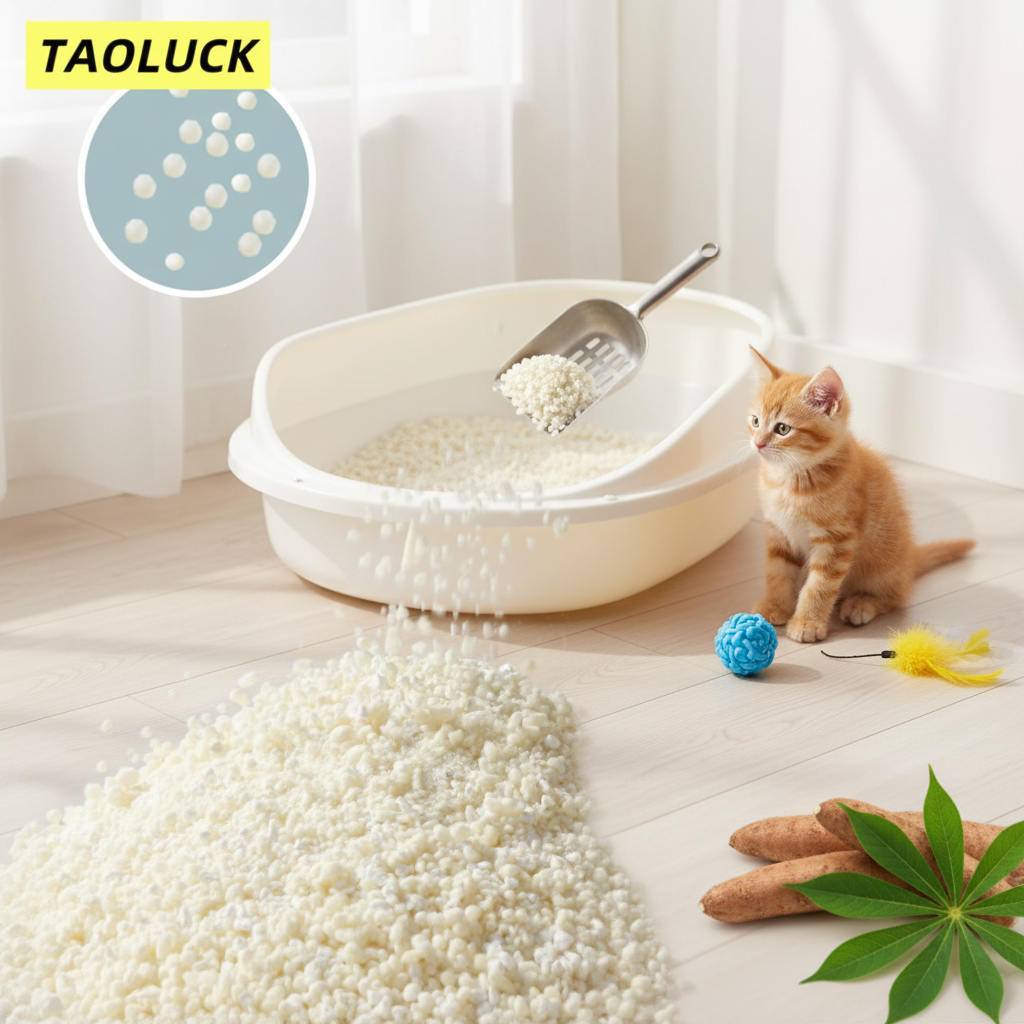
While 100% tofu litter remains popular, hybrid blends combining plant-based tofu granules with cassava starch or activated carbon minerals are gaining significant market share. Cassava starch boosts clumping speed and hardness to rival bentonite clay, while retaining 100% plant-based credentials and complete flushability.
Frequently Asked Procurement Questions (FAQ)
Essential guidance for global sourcing directors, retail brand managers, and OEM buyers.
What is the Minimum Order Quantity (MOQ) for custom private label orders?
Standard stocked SKU packaging starts at a low minimum threshold of 400 bags. For custom printed private label bags (rotogravure printing) or unique custom formulations (scent, color, pellet diameter), standard container-load MOQs are determined on a per-project basis.
How does CE certification apply to tofu pellet cat litter products?
CE certification verifies compliance with European safety, environmental, and non-toxicity directives. It certifies that our manufacturing facility adheres to strict raw material controls, ensuring the product is free from hazardous SVHC chemicals, toxic glues, and heavy metals, making it safe for international commerce.
What is the structural difference between Tofu and Cassava cat litter?
Tofu cat litter is produced from soybean pulp (okara) and pea fiber, offering extreme lightweight properties, excellent odor absorption, and instant flushability. Cassava cat litter is derived from pure cassava root starch, which forms harder clumps in under 3 seconds—making it the ideal choice for buyers looking for a clay-free alternative that mimics bentonite performance.
How is dust eliminated during the manufacturing process?
Our facility employs a 4-stage dust extraction process: initial post-drying screening, mechanical vibration sifting, dual negative-pressure cyclone vacuuming during pellet sorting, and a final inline air-wash right before bag sealing. This reduces dust levels below 0.1%.
Can we request pre-shipment laboratory samples for quality evaluation?
Yes. We supply sample kits for water absorption, clump hardness, dust evaluation, and fragrance stability testing prior to contract confirmation. Contact our export department to request custom testing samples.
Partner with a Verified Tofu Litter Manufacturer
Request our full product catalog, factory audit documents, CE certification reports, and OEM price matrix today. Our international sales team responds within 24 hours.
Get Catalog