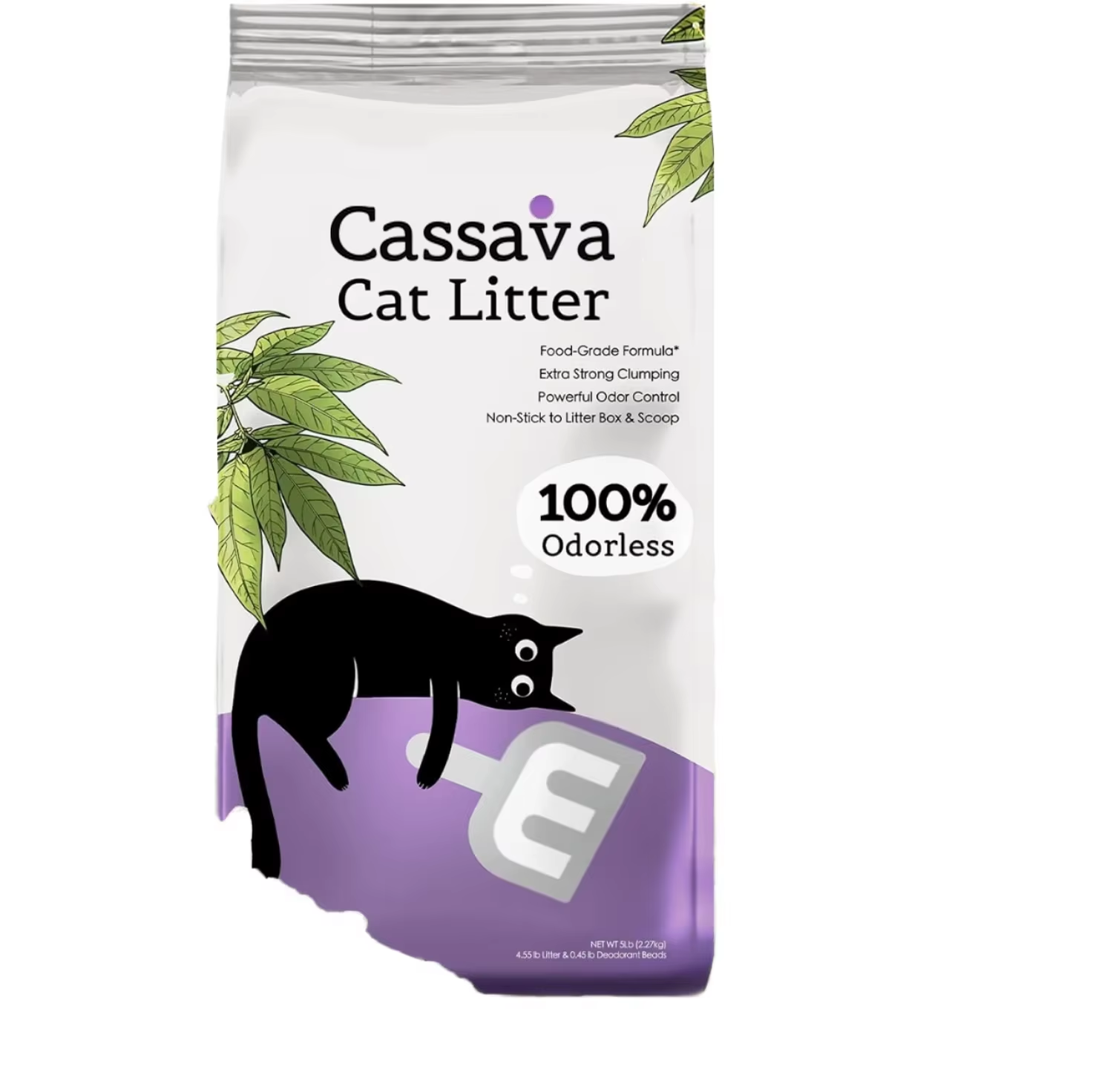
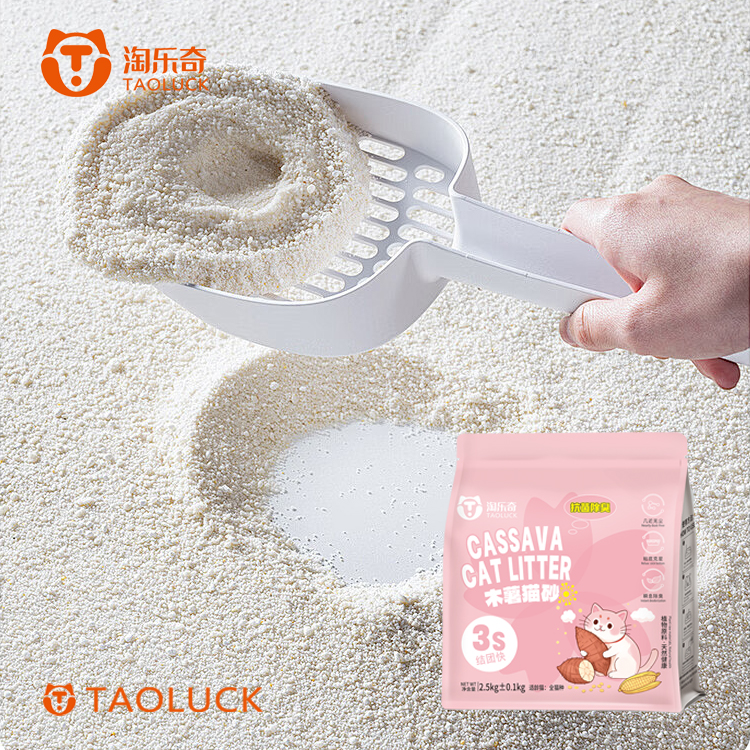
Wholesale Supply Eco-Friendly Natural Biodegradable Cassava Cat Litter Strong Odor Control Fast Clumping
Cassava Starch
99.9% Dust-Free
3s Clumping
Inspect Specifications
Engineered for high-volume pet specialty retailers, e-commerce brand accelerators, and wholesale distributors seeking ISO/SGS verified botanical cat litters with instant clump consolidation and near-zero airborne PM2.5 emissions.
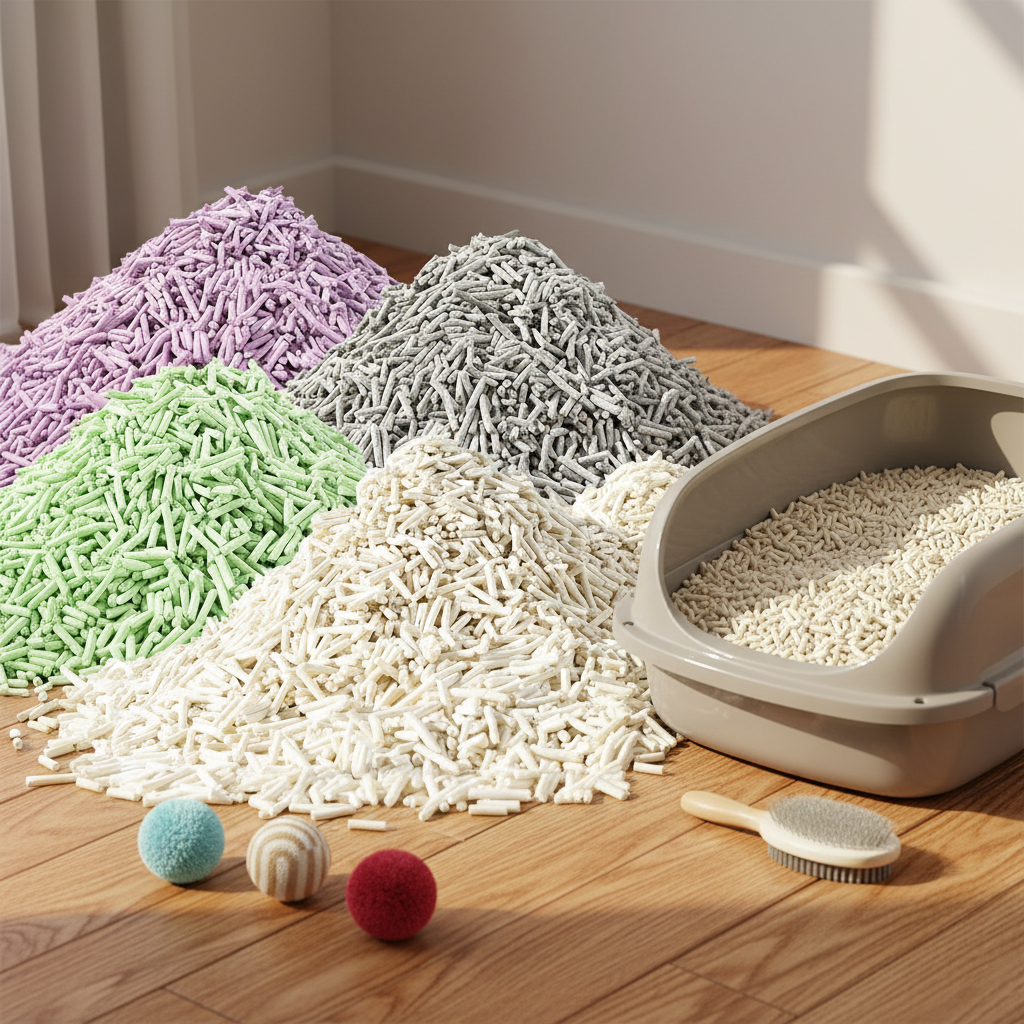
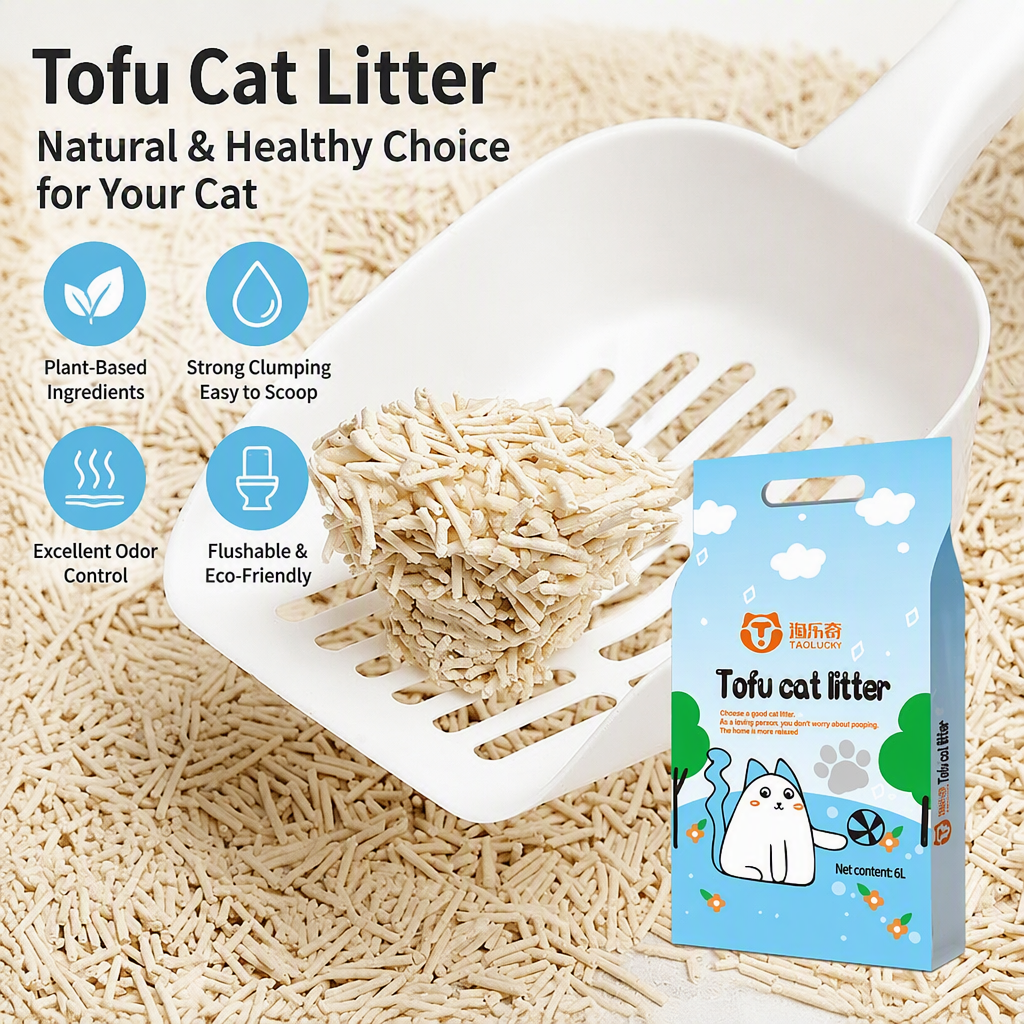
Procurement directors and supply chain strategists are transitioning from traditional mineral clays to plant-based matrices. Our technical analysis outlines the macro and micro drivers shaping the next five years of commercial pet care procurement.
Traditional sodium bentonite clays weigh 0.85–0.95 g/cm³, constraining maritime shipping containers to weight limits long before cubic volume is maximized. Modern engineered tofu litters achieve an apparent density of 0.48–0.56 g/cm³, allowing brand owners to transport up to 40% more functional retail litters per forty-foot high-cube (40' HQ) container, mitigating trans-Pacific and Asia-Europe freight volatility.
Global regulatory agencies—including the European Chemicals Agency (ECHA) and FDA Center for Veterinary Medicine—are tightening oversight of trace contaminants in pet environments. Our processing plant enforces strict incoming quality control (IQC) testing via high-performance liquid chromatography (HPLC) to verify zero aflatoxin B1/B2/G1/G2 contamination and heavy metal thresholds below 0.1 ppm for Lead (Pb) and Cadmium (Cd).
Urban multi-pet households increasingly demand sewer-flushable alternatives to landfill-bound plastic waste bags. Unlike bentonite which swells exponentially and occludes municipal PVC drainage plumbing, our okara-starch bonds rapidly disaggregate upon contact with turbulent excess water (1:20 volume ratio within 45 seconds), passing standard DIN 1986 domestic wastewater dispersion tests.
The transition from first-generation coarse tofu pellets to engineered multi-component matrices involves advanced starch retrogradation, enzymatic surface cross-linking, and micro-pore distribution control.
| Performance Metric | Legacy Bentonite Clay | Gen-1 Tofu Litter (Strip 3.0mm) | Brumel Micro-Extruded Tofu (1.5mm) | Brumel Cassava Hydro-Matrix |
|---|---|---|---|---|
| Hydration Expansion Speed | 12–18 Seconds | 5–7 Seconds | 2.8 Seconds | < 2.0 Seconds |
| Liquid Absorption Ratio | 200% – 250% by weight | 300% – 350% by weight | 400% – 450% by weight | 500% – 600% by weight |
| Fine Dust Fraction (< 150μm) | 3.5% – 7.0% | < 0.8% | < 0.2% (Quad De-dusted) | < 0.1% (Near-Zero PM2.5) |
| Pellet Compression Hardness | N/A (Granular aggregate) | 28N – 35N | 45N – 55N (Anti-Crush) | Spherical Cross-linked |
| Ammonia (NH₃) Capture (24h) | Physical masking only | 72% retention | 89% (Zinc Ricinoleate active) | 94% (Organic Acid Buffer) |
| Sanitary Disposal Path | Landfill exclusively | Conditional Flush / Compost | Full Rapid Dissolution | 100% Bio-compostable |
Traditional 3.0mm extruded pellets suffer from wide inter-pellet voids, allowing feline urine to percolate downward to the litter pan floor before absorption initiates. Brumel’s precision 1.5mm and 2.0mm micro-die plates decrease void volume by 58%, yielding an impenetrable surface consolidation layer that traps fluid within the top 20mm of the litter bed, minimizing box adhesion and extending bed replacement longevity.
Rather than relying on volatile perfume fragrances that trigger feline respiratory distress and cause litter avoidance, modern OEM formulation incorporates food-grade microbial inhibitors, botanical green tea polyphenols, and food-grade zinc ricinoleate. These active complexes covalently bond to volatile amines and mercaptans, neutralizing feline uremic odor complexes at the molecular source.
By blending food-grade soy protein fibers with high-gelatinization cassava starch, we achieve rapid hydration cohesion without the synthetic adhesives or synthetic gums (like industrial CMC) that can cause allergic reactions in cats. The resulting clumps exhibit high shear resistance during vigorous scooping, preventing fragment breakage and box contamination.
Comprehensive engineering, regulatory, and supply chain answers address critical considerations for brand owners, supply chain executives, and quality assurance personnel.
The critical quality parameter for botanical pet litters during transoceanic shipping across equatorial trade lanes is equilibrium moisture content (EMC). Brumel maintains moisture content strictly below 9.5% via counterflow hot-air fluid bed drying. At <9.5% water activity (Aw < 0.60), fungal spores such as Aspergillus and Penicillium cannot germinate. Furthermore, our export cartons and 4-side sealed vacuum-form bags feature co-extruded barrier layers (PET/AL/PE or PA/PE) that prevent moisture vapor penetration even at 90% ambient relative humidity over 60 days in transit.
Dust generated during pellet manufacturing stems from mechanical friability and post-drying abrasion. Brumel integrates a multi-stage dust abatement system: following cooling, litters undergo two stages of vibrating sieves to remove oversized and undersized particulate, followed by dual negative-pressure cyclonic suction columns that vacuum all micro-dust particles below 150 microns. The finished pellets are transported via gentle bucket elevators to the automated packaging line to eliminate drop-shatter, maintaining a 99.8% to 99.9% dust-free threshold in consumer-facing bags.
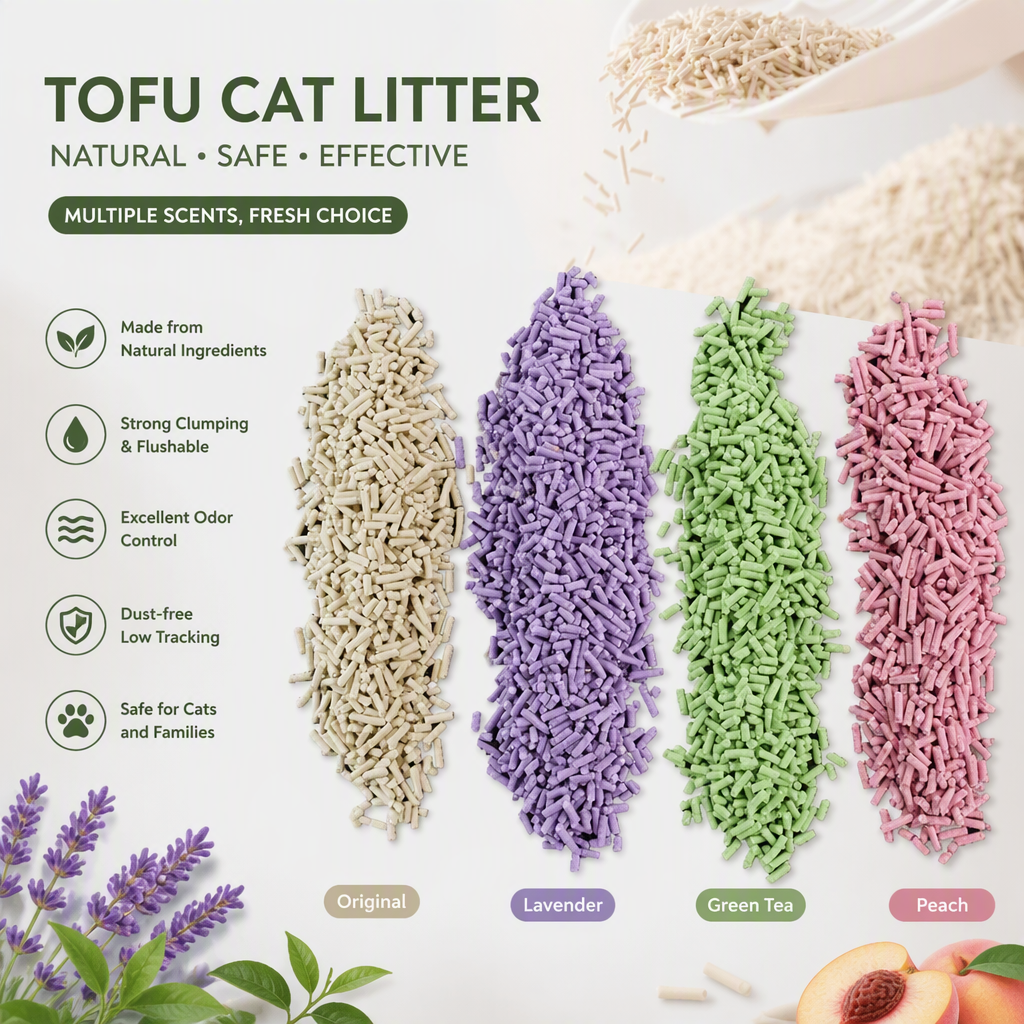
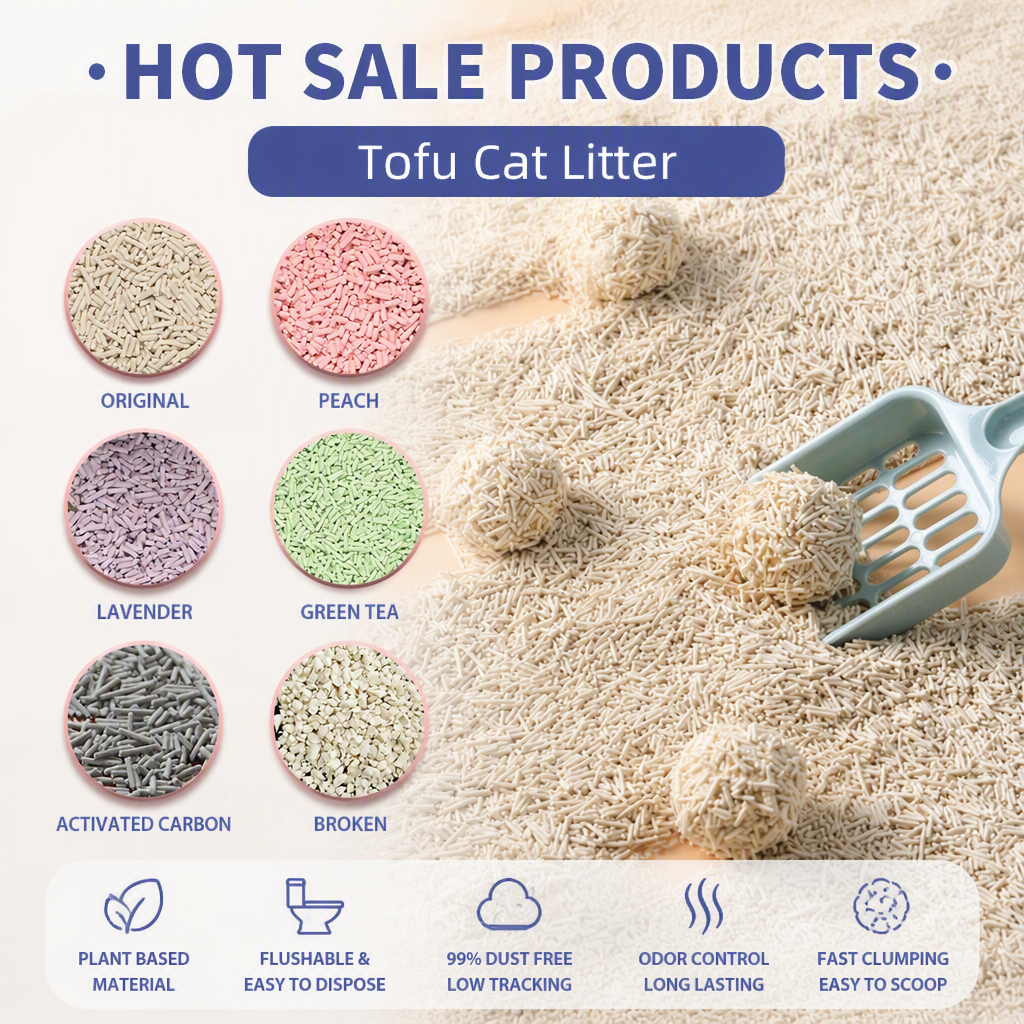
We provide full structural and sensory customization from a baseline MOQ of 400 retail bags: (1) Pellet geometry: 1.5mm micro-strip, 2.0mm standard strip, 3.0mm robust strip, or irregular broken crushed granules; (2) Olfactory profiles: unscented botanical, light green tea, milk vanilla, peach, activated bamboo charcoal, or custom essential fragrances; (3) Hybrid compounding: custom ratios of tofu pellets with cassava sand, corn starch, or crushed deodorizing minerals; (4) Packaging: vacuum-formed stand-up pouches, flat-bottom box pouches with custom tear notches, slide-zipper reclosable seals, high-strength glossy or matte spot UV finishes, and bulk ton-bag shipping.
Standard packaging is 6L (approx. 2.4–2.5 kg) vacuum bags. A 20-foot General Purpose container (20' GP) typically accommodates 10 to 11 metric tons (approx. 4,200 to 4,500 bags) depending on palletization requirements. A 40-foot High Cube (40' HQ) container holds 24 to 26 metric tons (approx. 9,800 to 10,500 bags floor-loaded, or 8,400 to 9,000 bags securely slip-sheeted and shrink-wrapped on export heat-treated ISPM-15 wooden pallets). Palletized configurations ensure swift automated forklift de-stuffing at third-party logistics (3PL) fulfillment centers across Europe and North America.
Brumel facilities are on-site assessed by SGS Group for manufacturing capability, production capacity, and labor standards. Every export batch can be accompanied by an analytical Certificate of Analysis (COA) specifying: residual moisture percentage, clump expansion diameter, clumping compression force, microbiological counts (total aerobic plate count < 1,000 CFU/g, coliforms < 10 CFU/g, absence of Salmonella and E. coli), SVHC (Substances of Very High Concern) screening under REACH regulations, and zero-mineral-dust silica validation.
From raw bean curd cake conditioning to precision multi-station packaging, our Dongying manufacturing plant combines modern high-torque extrusion with systematic in-line process control.
Raw food-grade soybean residue and fine-milled cassava starches are metered via loss-in-weight gravimetric screw feeders into high-shear continuous conditioning chambers. Precise thermal regulation (85°C–95°C) initiates starch gelatinization, creating long-chain molecular polymers that establish clump cohesion without synthetic cross-linking chemicals.
Extruded wet pellets pass through a continuous multi-deck counterflow dryer that circulates dehumidified hot air around every pellet. This slow, moisture-gradient reduction prevents surface case-hardening—a common flaw in low-cost litters that traps inner water, causing clump dissolution and mold outbreaks during sea freight.
Automated multi-head weigher systems feed high-barrier film packaging stations capable of gas-flush modified atmosphere packaging (MAP) or high-density vacuum brick extraction. Vacuum-forming renders each consumer pouch structurally rigid, eliminating transit friction that leads to granule fragmentation and fine dust creation.
Whether you require a pilot trial run of 400 customized bags, an advanced 1.5mm micro-pellet formulation, or high-volume ocean container contract manufacturing, Brumel’s technical engineering and export teams provide comprehensive formulation, brand design, and logistics support.
Contact Us