Featured Odor-Control Mixed & Plant-Based Formulations
Engineered for European brand owners, retail distributors, and supermarket pet-care suppliers seeking low-dust, hyper-absorbent private-label feline hygiene solutions.
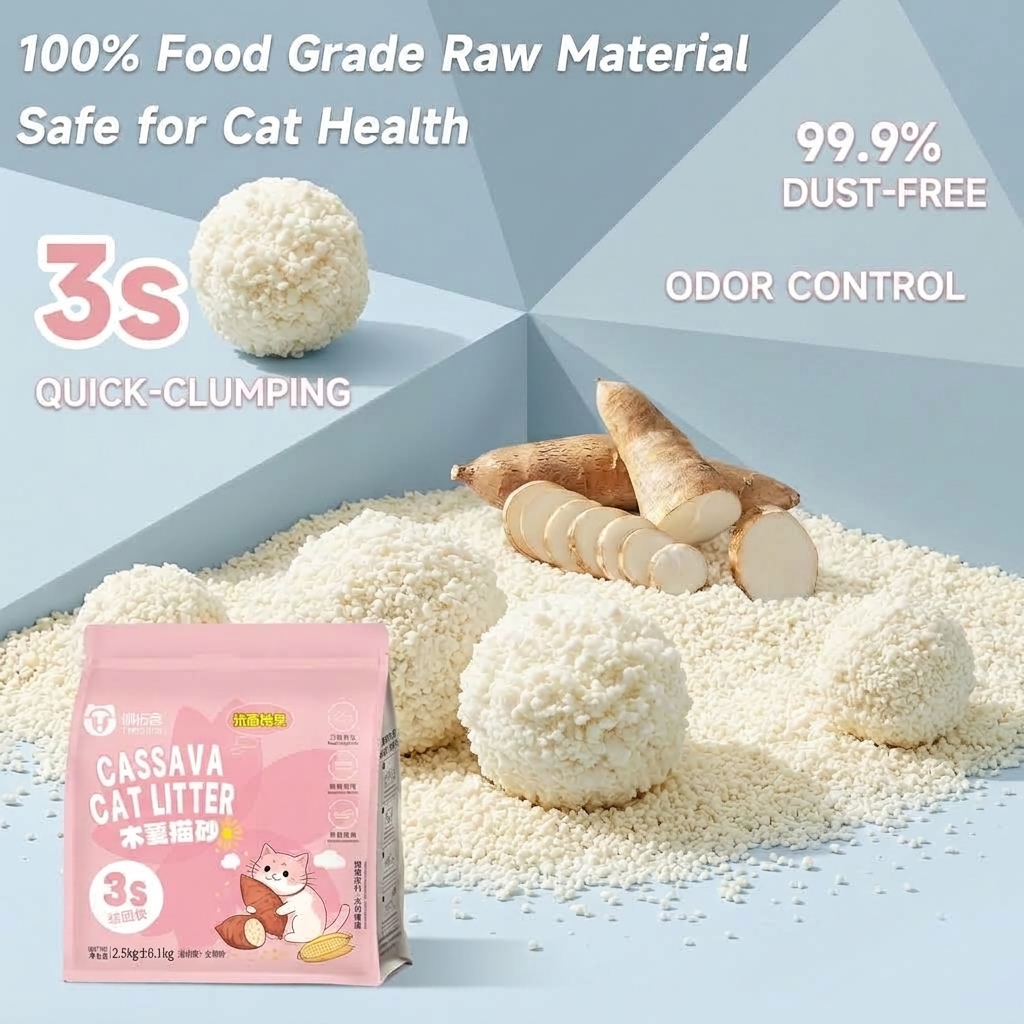
Factory Direct Cat Litter Natural Eco-Friendly Wholesale OEM Cassava Litter
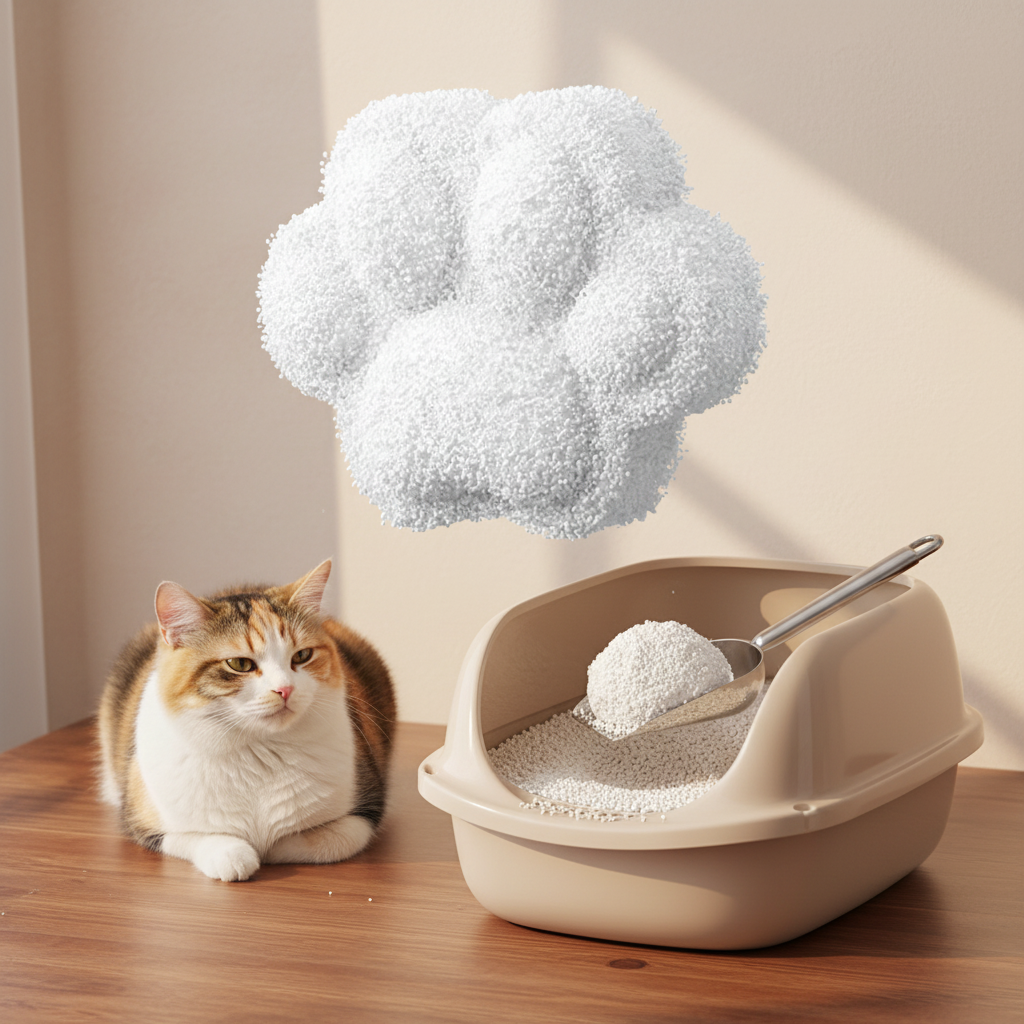
Wholesale Cat Friendly Pet Grooming Fast Clumping Easy Scoop Cassava Litter
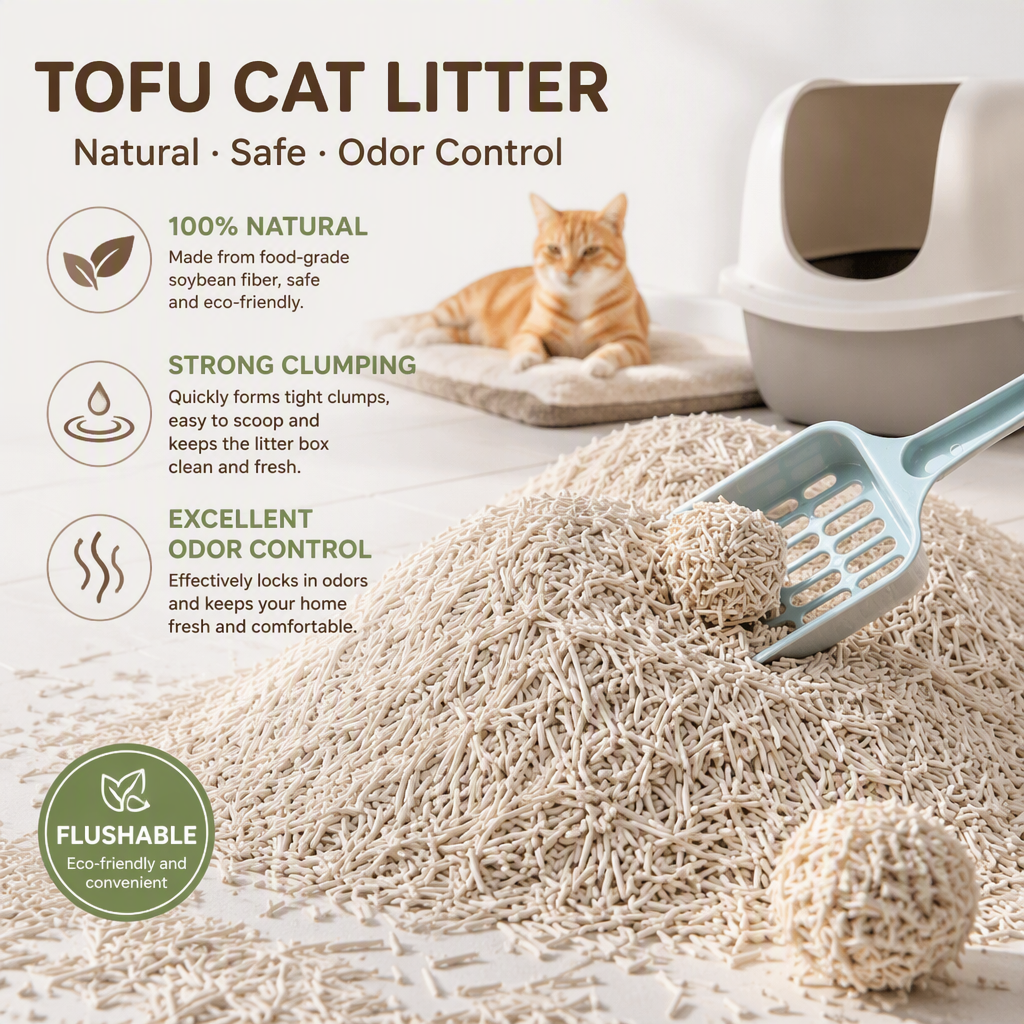
Factory Wholesales Cat Litter Natural Strong Clumping Flushable 2.5kg Tofu Litter
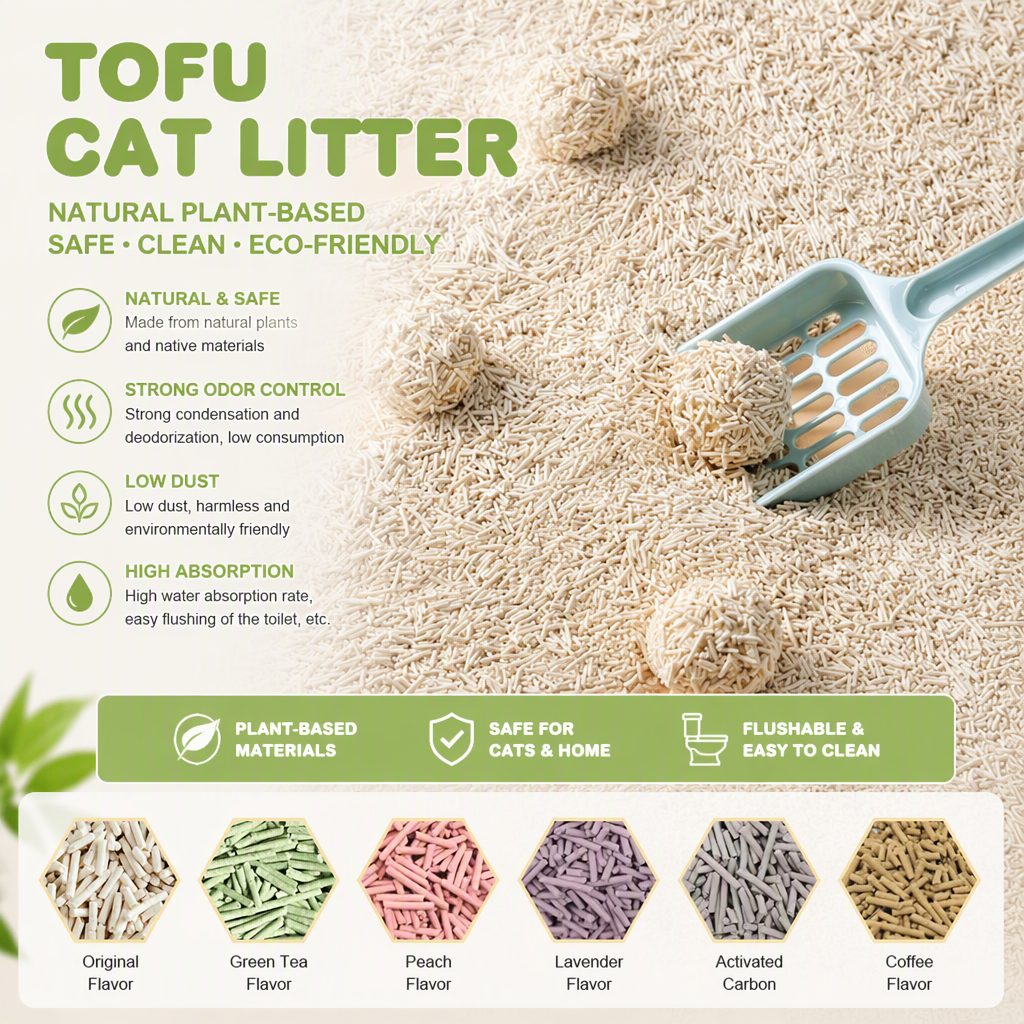
Biodegradable Cat Litter Solid Clumping Flushable Non-Stick Plant Cassava Litter
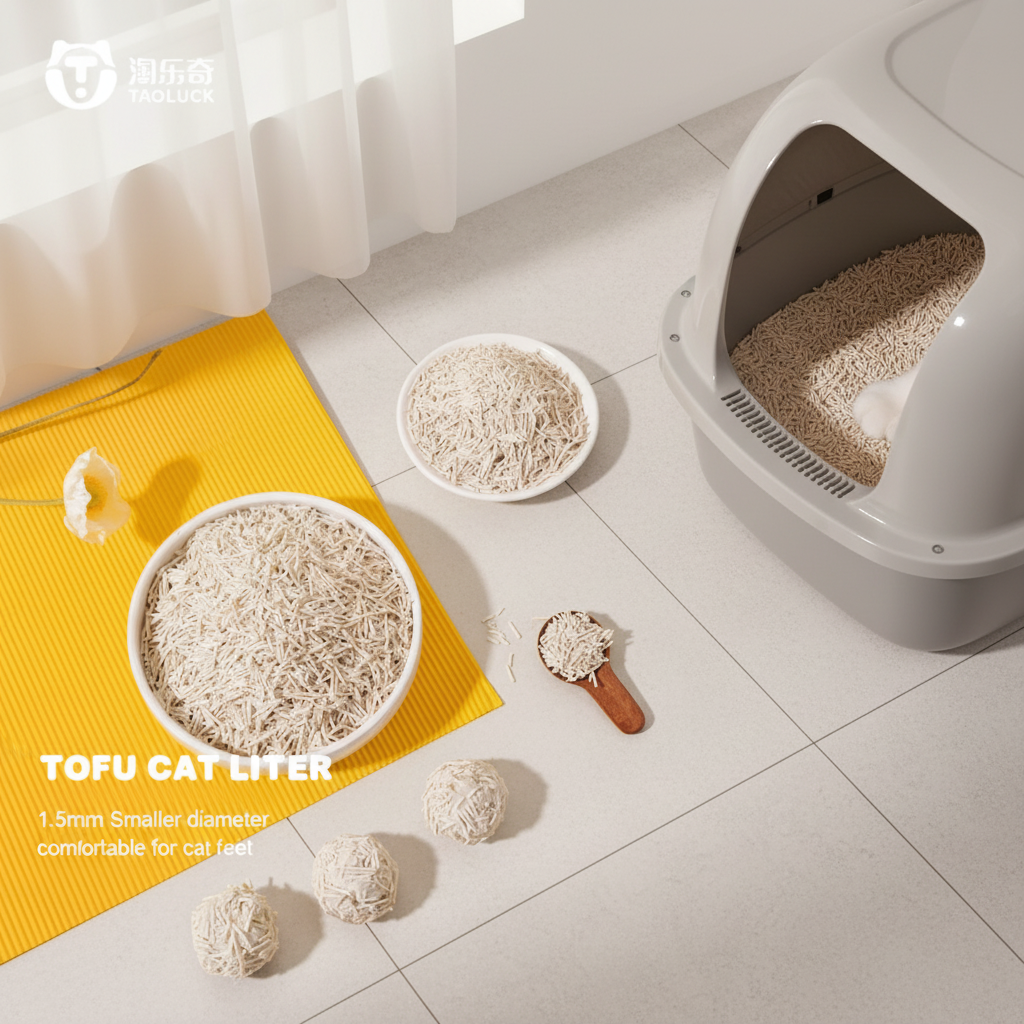
Customized Food-Grade Safe 400% Super Absorbent Lavender Pea Fiber Tofu Litter
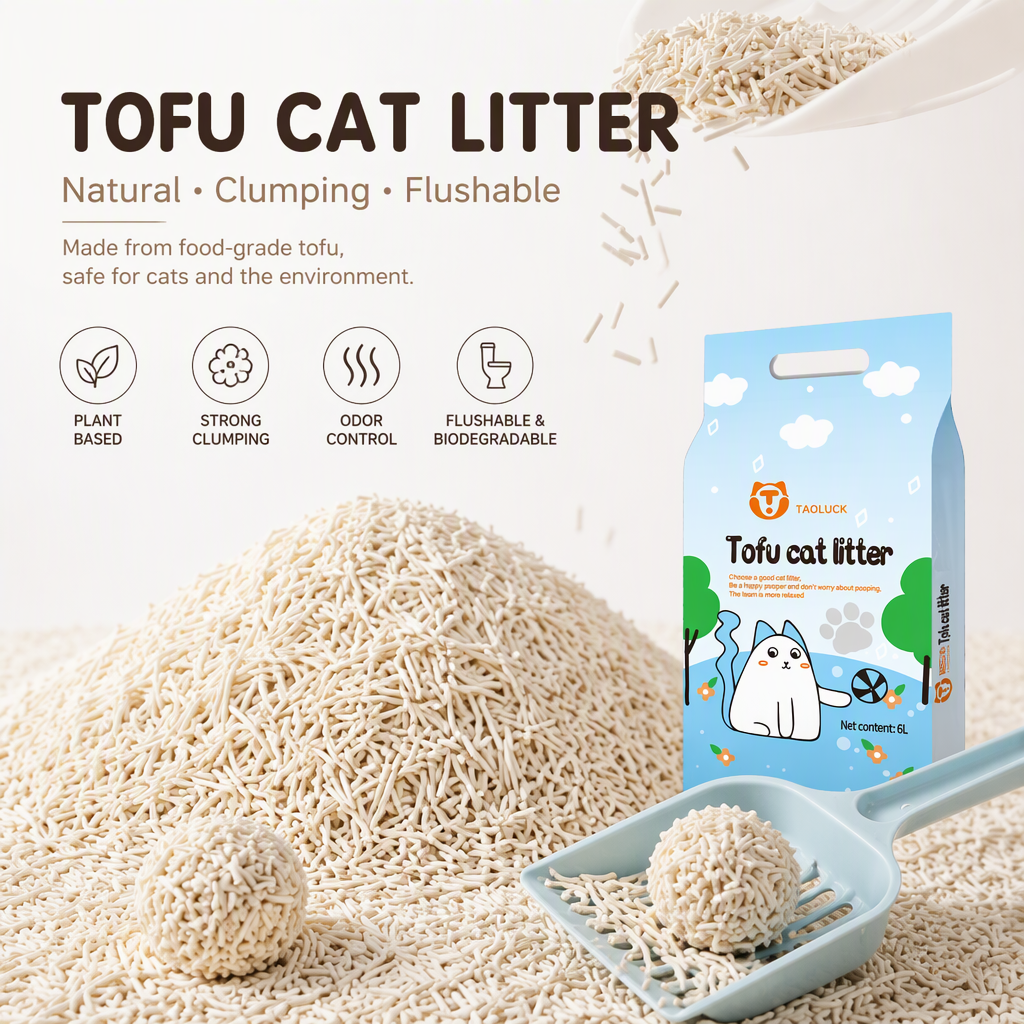
Factory Customized Strong Clumping Non-Stick Biodegradable Plant Tofu Litter
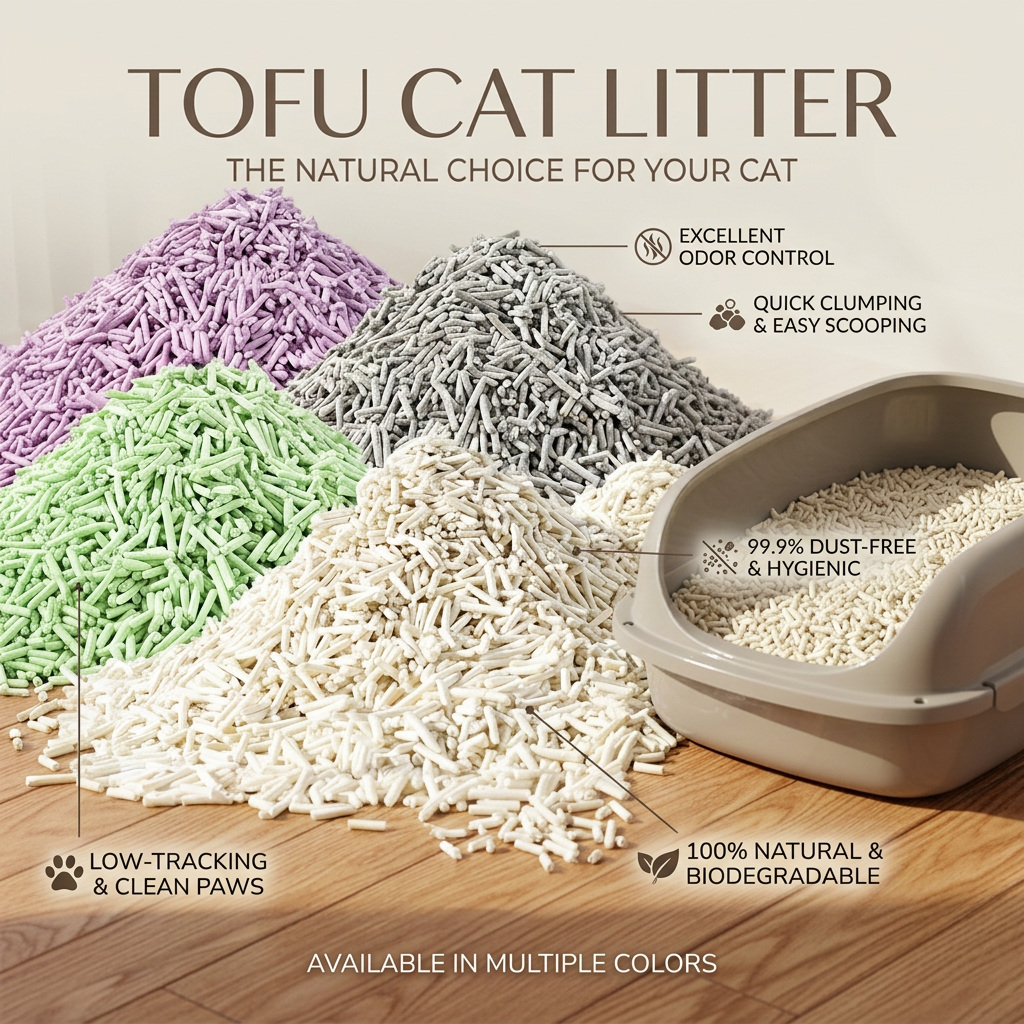
Fast Absorbent Dust Free Cat Litter Factory Highly Free OEM Premium Tofu Litter
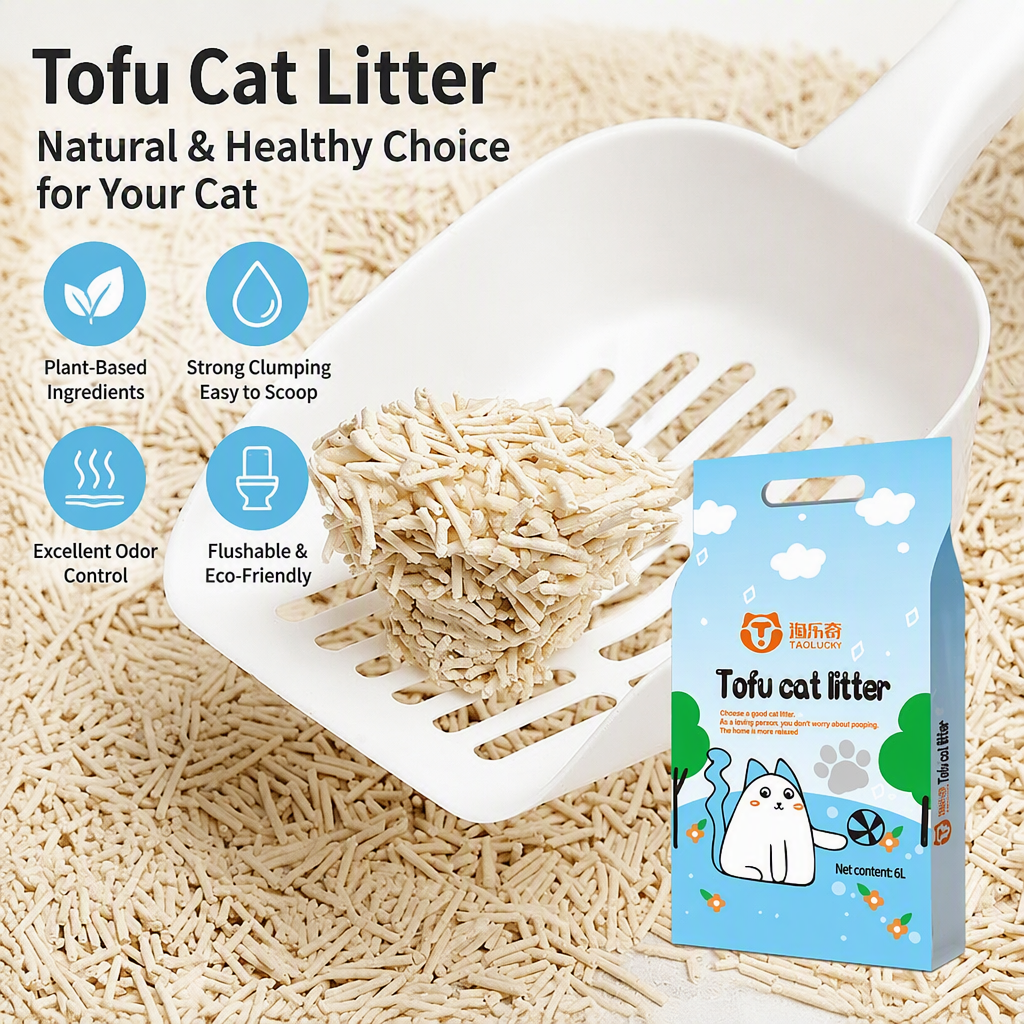
Strong Clumping Flushable Cat Litter Odor Control Dust-Free Eco Tofu Litter
The Biochemical Architecture of Engineered Mixed Cat Litter
Addressing the fundamental limitations of single-origin bentonites and fragile plant litters through high-stability scientific hybrid blending.
70/30 Synergistic Ratio
Standard mineral litters rely exclusively on macroscopic physical encapsulation, leaving gaseous volatile fatty acids (VFAs) to escape into room ambient air. Dongying Brumel's proprietary mixed formulation pairs 70% food-grade pea fiber/tofu pellets (2.0mm or 1.5mm diameter) with 30% purified, sodium-activated micro-bentonite crushed granules. This hybrid matrix fills the interstitial voids between cylinder pellets, accelerating capillary fluid migration downward before it can pool along tray basements.
Chemisorption & Urease Inhibition
Cat urine malodor is primarily driven by the enzymatic breakdown of urea into volatile ammonia gas ($NH_3$) alongside methyl mercaptan ($CH_3SH$). Our mixed litter integrates functionalized starch interlinkers that rapidly depress pH below 5.8 at the core of the agglomerate. This acidic micro-environment completely halts microbial urease activity. Meanwhile, negative surface lattice charges on our montmorillonite component capture $NH_4^+$ ammonium ions through cation exchange, locking odors chemically rather than masking them with synthetic fragrances.
Five-Stage dedusting Dynamics
Respiratory distress in domesticated indoor felids is directly correlated with particulate matter smaller than 10 microns (PM10 and PM2.5). Brumel's Dongying processing infrastructure incorporates dual negative-pressure cyclone separators, vibratory multi-mesh sizing decks, counter-flow air scrubbers, and electrostatic polarity curtains. The finished mixed batch leaves our bagging line with a laboratory-verified dust density index below 0.1%, eliminating tracking across modern parquet and tile floorings.
Engineered Specifically for the Greater Liège & Meuse Valley Market
Addressing microclimates, high-density residential layouts, and regional Walloon municipal waste directives.
Compact Apartment Living in Historic Liège
Liège’s urban landscape, spanning historical corridors like Outremeuse, Saint-Léonard, and the modern Guillemins transit district, is characterized by compact multi-family residential buildings and classic row homes. Indoor ventilation in these apartments during colder Walloon months is inherently constrained. Traditional non-clumping gravel litters saturate quickly, creating unbearable ammonia concentrations in small living rooms. Our mixed litter forms tight, compact pucks at the top layer within 3 seconds, keeping tray bases dry and odor emissions undetectable in confined spaces.
Meuse River Valley Relative Humidity Resistance
Liège experiences maritime temperate humidity exacerbated by the microclimate of the Meuse river valley, regularly recording atmospheric moisture levels exceeding 80% RH from October through March. Inferior plant-only litters (such as low-grade corn or coarse wood pellets) suffer from moisture softening in humid storage, drastically reducing their functional clump integrity. Brumel’s mixed formula utilizes moisture-resistant pea fiber and high-swelling montmorillonite that will not prematurely clump inside opened bags or tray reservoirs.
Walloon Waste Sorting & Intradel Compliance
Municipal waste in the Province of Liège is regulated under strict regional consortia such as Intradel, where household residual waste (poubelle noire / fraction résiduelle) is subject to weight and volume tariffs to discourage landfilling. Unlike 100% bentonite litters that add massive dead-weight to residential trash bags, our mixed litter is 40% lighter per liter. The plant-based portion reduces incineration ash volumes at regional energy-recovery facilities, appealing to environmentally conscious Walloon consumers.
B2B Shifts Across Belgian & Western European Pet Channels
Critical commercial intelligence for pet specialty distributors, hypermarkets, and e-commerce brand builders.
Decline of Traditional Strip-Mined Bentonite
European pet retail chains (such as Tom&Co, Maxi Zoo Belgium, and independent pet retailers) are facing consumer backlash against open-pit sodium bentonite mining due to its high carbon footprint and non-renewable status. Simultaneously, consumers reject early-generation tofu litter due to its fragile clumping and gummy tray residue. The engineered mixed segment represents the fastest-growing pet care category across Benelux, capturing market share by combining clay-like clumping rigidity with agricultural plant-fiber renewability.
EU PPWR & Packaging Optimization
The European Union's Packaging and Packaging Waste Regulation (PPWR) demands verifiable recyclability by 2030. Brumel works directly with Belgian brand builders to transition away from complex non-recyclable metallized multi-layers. We offer single-material recyclable LDPE pouches, reinforced compostable FSC-certified kraft bags with bio-coatings, and vacuum-compressed packaging that optimizes pallet utilization by up to 28% for maritime shipping into the Autonomous Port of Liège multimodal network.
Trimodal Logistics via Trilogiport Corridor
Liège is the premier logistics crossroad in northwest Europe, connected directly to Antwerp and Rotterdam through the Albert Canal and dedicated rail freight. By consolidating OEM shipments from our Dongying manufacturing base through Qingdao Port directly to Antwerp, cargo easily reaches Liège Trilogiport with minimal carbon emissions. This multimodal inland link delivers substantial transport cost savings compared to expensive truck transit from southern European processors.
Engineering Matrix: Brumel Mixed Formula vs. Market Alternates
Quantitative data derived from standardized SGS and in-house laboratory trials under simulated 75% RH conditions.
| Evaluation Parameter | Brumel Odor-Control Mixed | Standard Pure Tofu (3.0mm) | Imported Sodium Bentonite | Silica Gel Crystals |
|---|---|---|---|---|
| Primary Composition | 70% Pea Fiber + 30% Bentonite | 100% Soya / Okara Fiber | 100% Mined Montmorillonite | 100% Synthetic Amorphous Silica |
| Liquid Clump Speed (25ml Water) | 1.8 - 2.5 Seconds | 4.5 - 6.0 Seconds | 2.0 - 3.2 Seconds | Non-Clumping (Saturating) |
| Ammonia Encapsulation (24 Hr) | 99.8% (Chemical Neutralization) | 84.5% (Slight Scent Masking) | 89.2% (Physical Binding) | 72.0% (Fast Odor Saturation) |
| Dust Index (PM2.5 / PM10) | < 0.1% (5-Stage De-dusted) | 0.4% - 0.8% (Pellet Breakdown) | 1.8% - 3.5% (High Airborne) | 1.2% (Silicosis Hazard Risk) |
| Weight per Liter | Approx. 480 - 520 g/L | Approx. 400 - 430 g/L | Approx. 850 - 950 g/L | Approx. 420 - 450 g/L |
| Disposal Efficiency (EU Standard) | Low Ash Incineration / Biodegradable | Flushable / Home Compostable | Heavy Landfill / Incinerator Slag | Non-degradable Mineral Waste |
| Tray Basement Adhesion Risk | Zero (Self-Encapsulating Puck) | Moderate (Can Glue on Humid Trays) | High (Sticky Clay Cementation) | Liquid Pools Under Bottom |
Why European Pet Brands Rely on Dongying Brumel
Full transparency, verified production capacity, and turnkey private-label customization direct from Shandong's industrial hub.
SGS On-Site Verified Facility
Dongying Brumel Pet Products Co., Ltd. operates an inspected 7,500 m² modern manufacturing plant in Shandong, China. Evaluated on-site by SGS Group, our facilities meet rigorous quality management criteria, equipped with automated batching systems, twin-screw granulators, and high-efficiency counter-flow dryers ensuring batch-to-batch consistency for all container shipments.
Tailored OEM/ODM Formulations
We do not restrict buyers to generic off-the-shelf litters. Liège and Belgian brand owners can tailor specific pellet diameters (1.5mm micro-strips or standard 2.0mm), blend ratios (from 80/20 plant-rich to 50/50 cost-performance mixes), custom floral or natural botanicals (unscented, active carbon, French lavender, baby powder, matcha), and vacuum block or pillow bag formats starting from an accessible 400-bag MOQ.
Rigid Quality Control & Tracing
Every single batch produced at Brumel undergoes three-stage quality verification: incoming moisture titration of raw pea fibers and bentonite, hourly moisture content screening (<10.0% standard), and spectrophotometric ammonia headspace quantification. Retained samples from each batch are preserved for 18 months, providing our European distribution partners with end-to-end commercial confidence.
Frequently Asked Questions by Liège & European Buyers
Clear commercial answers covering customs, quality compliance, packaging, and logistics into Belgium.
Plant-dominant mixed cat litter (pea fiber/tofu composite) is typically imported under HS Code 1404.90.00 (vegetable products not elsewhere specified) or HS Code 2309.90 (preparations used in animal feeding/care). Third-country import duties into the EU under these codes generally range from 0% to 3.8% under the TARIC schedule. We provide custom declarations and pre-shipment documentation to streamline customs clearance via Belgian customs at Antwerp or Liège Bierset.
Belgium imposes strict obligations regarding packaging waste through the Interregional Packaging Commission (CIE/IVC) and Fost Plus. To minimize corporate contribution fees, we supply fully mono-material recyclable LDPE bags (Class 4 recycling code) or biodegradable FSC-certified unbleached kraft packaging. We assist buyers in printing mandatory sorting pictograms (such as Triman and Info-Tri symbols for francophone regions like Wallonia).
Yes. We regularly assemble mixed container loads for European distributors. For example, a single 40ft HC container can be configured with 40% mixed odor-control litter, 30% pure cassava clumping litter, and 30% corrugated cat scratching boards. This allows distributors in Liège to test new product lines without committing to multiple single-SKU full containers.
Ocean transit across equatorial waters into northern Europe takes 28 to 35 days. We control the moisture content of our dried pellets strictly below 8.5% (substantially below the industry average of 11%). Bags are hermetically vacuum-sealed or packed in breathable micro-perforated bags with industrial desiccant strips inside shipping containers, ensuring absolute freshness upon deconsolidation in Belgium.
While our standard plain-bag or Brumel-label trial order starts at just 400 bags, fully customized rotogravure or digital printed bags with your brand graphics, barcodes, and French/Dutch bilingual copy generally start at 5,000 to 10,000 bags depending on bag dimensions. Printed films can be held in stock at our factory and filled across multiple staggered manufacturing runs.
Our in-house design and compliance department works directly with your marketing team. We provide dieline templates and verify that necessary consumer information—including composition statements, instructions for use, proper disposal warnings (avoiding toilet flushing where local sewer regulations prohibit), net weight in metric, and batch numbers—complies with Belgian economic and pet hygiene regulations.
Factory production for a typical 40ft container requires 14 to 21 days from final deposit and artwork approval. Ocean transit from Qingdao Port to the Port of Antwerp-Bruges averages 30 to 35 days. Barge or rail transfer to Liège Trilogiport takes 1 to 2 business days. In total, distributors can expect delivery within 50 to 60 days from purchase order confirmation.
Absolutely. As an SGS on-site verified manufacturer, we welcome client-commissioned inspections by SGS, Bureau Veritas, TÜV, or Intertek. Inspectors have full access to witness batch sampling, drop tests, vacuum seal integrity checks, and loading weight verifications at our Dongying facility prior to container dispatch.
Build Your High-Margin Private Label Litter Line for Liège
Partner with Dongying Brumel Pet Products Co., Ltd. Get verified laboratory test reports, customized bulk formulations, free sample kits, and direct factory pricing for the Belgian pet retail market.
Get Catalog