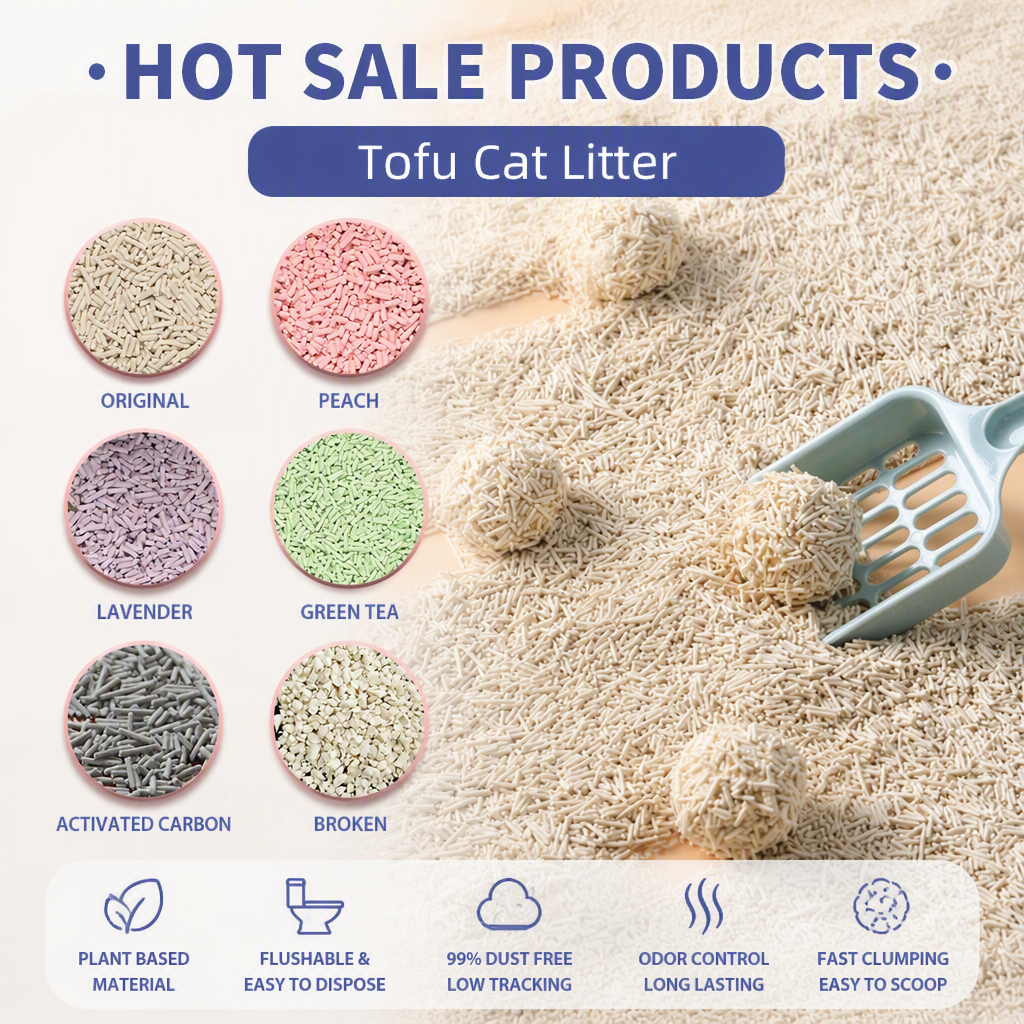
Decarbonizing Dutch Pet Retail with Engineered Plant-Based Litter
As the Netherlands advances toward strict circular economy frameworks and targets a 50% raw primary material consumption cut by 2030, traditional mineral bentonite faces rising logistical and environmental penalties. Sourcing from an SGS-verified manufacturer specialized in cassava starch and pea fiber blends provides European distributors, pet supermarket chains (such as those throughout Amsterdam, Rotterdam, Utrecht, and Eindhoven), and online private labels with low-carbon, flushable, and ultra-durable clumping solutions.
Dutch Market Specifics
Optimizing for Urban Dutch Living & Regional Municipal Waste Standards
Consumer behavior in Dutch urban corridors differs fundamentally from North American or broader Asian markets. Urban density, historical townhouse architecture, and tight wastewater compliance dictate specialized cat litter formulations.
Compact Canal Living (Grachtenpanden)
Over 58% of cat owners in urban Randstad (Amsterdam, Utrecht, The Hague) inhabit multi-level apartments or historical canal homes. Dense indoor environments require high-potency volatile organic compound (VOC) trapping and zero airborne crystalline silica dust to safeguard feline respiratory systems in tightly insulated spaces during winter months.
GFT-Afval (Organic Waste) Compatibility
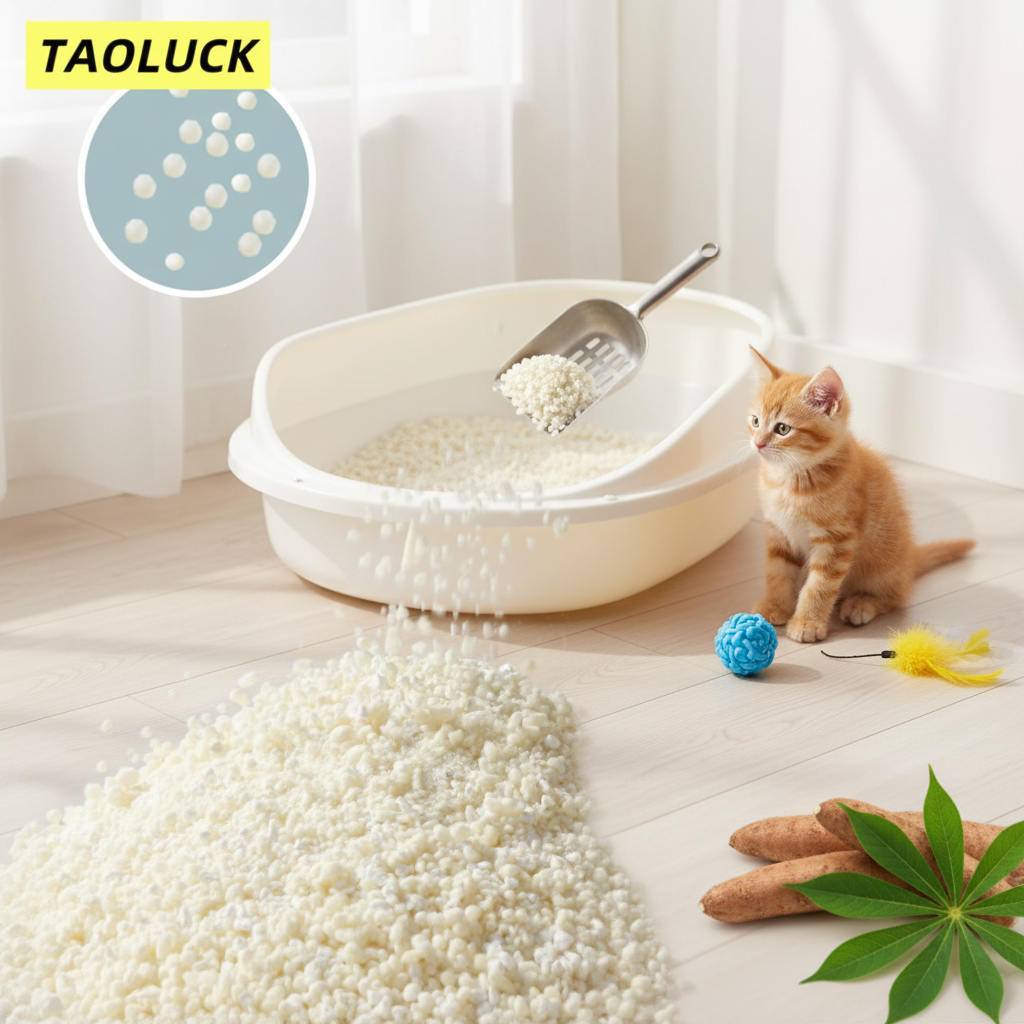
Dutch municipalities utilize automated industrial composting facilities for Groente-, Fruit- en Tuinafval (GFT). Our cassava starch formulations are 100% plant-derived without synthetic glues or artificial mineral fillers, ensuring safe biological breakdown when managed via certified compost or domestic green disposal guidelines.
Port of Rotterdam Logistics Integration
Consolidated cargo handling at Maasvlakte (Port of Rotterdam) allows Dutch importers to leverage rapid transshipment routes across Western Europe via inland barge and rail networks. Moisture-proof vacuum packaging prevents maritime humidity absorption during 28-day transit cycles from Qingdao/Tianjin.
7,500 m²
Modern Production Floorspace
< 3 Sec
Lab-Tested Moisture Clumping
400 Bags
Accessible Private Label MOQ
99.9%
Dedusted Fine Granule Finish
Industry Whitepaper Insights
Macro Trends Transforming the Benelux Pet Care Sector
Strategic purchasing managers across the Netherlands are executing sweeping supply-chain adjustments driven by regulatory frameworks, climate awareness, and shifting consumer demographics.
Shift from Bentonite to Renewable Starch
Bentonite strip-mining incurs severe ecological footprints. Dutch pet stores are deliberately reducing sodium bentonite stock by 18% year-over-year in favor of renewable agricultural by-products such as food-grade cassava roots and pea fibers.
Packaging Waste Tax (Afvalbeheerbijdrage)
The Dutch Packaging Waste Fund (Afvalfonds Verpakkingen) imposes fees on non-recyclable multi-laminate plastics. We supply mono-material recyclable PE/PE pouches and biodegradable kraft paper packaging to minimize importer tax liabilities.
Rising Demand for Unscented Natural Lines
Unlike fragrance-heavy American alternatives, Dutch veterinarians and ethical pet parents strongly favor pure, fragrance-free cat litters. Natural cassava starch provides mechanical ammonia entrapment without relying on heavy masking perfumes.
Freight Weight & Carbon Optimization
Cassava litter delivers up to 2.5x the absorption volume of clay at roughly 45% lower bulk weight. Importers save substantially on container payload limitations (Gross Weight limits) and road transit fuel costs across European highway networks.
Material Science Matrix
Technical Benchmark: Cassava Starch vs Alternative Substrates
Direct laboratory comparative metrics illustrating water retention, density, dust emissions, and carbon footprint for enterprise procurement teams.
| Evaluation Parameter | Engineered Cassava Starch | Standard Tofu (Soy Pulp) | Sodium Bentonite Clay | Silica Gel Crystals |
|---|---|---|---|---|
| Primary Raw Base | Food-Grade Cassava Root Starch | Soybean Okara / Pea Fiber | Quarried Smectite Clay | Synthetic Sodium Silicate |
| Clump Cohesion Speed | < 3 Seconds | 5 - 8 Seconds | 10 - 15 Seconds | Non-Clumping (Absorption Only) |
| Bulk Density (kg/L) | 0.52 - 0.58 (Lightweight) | 0.48 - 0.54 (Lightweight) | 0.85 - 1.05 (Heavy) | 0.42 - 0.46 (Ultra-Light) |
| Liquid Absorption Index | 400% - 450% | 300% - 350% | 180% - 220% | 150% - 180% |
| Airborne Particulate (<PM10) | < 0.1% (Multi-Duster Cycled) | < 0.3% (Screened Pellet) | > 2.5% (High Silica Dust) | < 0.5% (Fracture Dust Risk) |
| Disposal & Flushability | Rapid Hydraulic Dispersion | Flushable in Small Quantities | Strictly Non-Flushable | Landfill Disposal Only |
Manufacturing Authority
Dongying Brumel Pet Products: SGS Verified Infrastructure
Dongying Brumel Pet Products Co., Ltd. operates state-of-the-art production lines in Shandong, China. Evaluated on-site by SGS Group, our integrated 7,500 square-meter production and warehousing facilities guarantee consistent starch formulation, precise granulation control, and moisture-controlled packaging suitable for cross-continental transit into Western European distribution hubs.
Strict Raw Material Assaying
Incoming cassava starch batches undergo moisture equilibrium and amylose purity assays to ensure consistent binder integrity before high-pressure granulation.
Triple-Stage Dedusting Lines
Finished pellets pass through negative-pressure air classifiers and vibrating screens, stripping micro-dust particles to ensure a virtually dust-free pour for end consumers.
Flexible Private Labeling (OEM/ODM)
From 400-bag trial orders to full 40HQ container runs, we support customized particle sizing (1.5mm - 3.0mm), vacuum brick formats, and multilingual Dutch/English packaging.
Procurement Knowledge Base
Frequently Asked Questions by Dutch & Benelux Buyers
Essential contractual, logistical, and technical considerations for category managers sourcing cassava litter into the European Union.
How does cassava litter comply with Dutch municipal wastewater rules?
Pure cassava starch is cold-water soluble and quickly disperses under mechanical turbulence. Unlike sodium bentonite, which forms pipe-clogging cement-like blocks, cassava clumping agents disintegrate rapidly when flushed individually, conforming to typical municipal domestic drain thresholds.
What is the standard shipping lead time to the Port of Rotterdam?
Production lead times for initial private label packaging runs typically take 15 to 20 days. Maritime transit from Qingdao Port to Rotterdam Terminal (ECT Delta / APMT) generally spans 26 to 32 days, providing reliable 7-week cycle replenishment across Benelux warehouses.
What are the minimum order quantities (MOQ) for custom Dutch packaging?
We support fast-market testing with minimum orders starting at only 400 bags for neutral stock bags with customized labeling. Fully rotogravure-printed custom private label bags begin at accessible 1,000 to 2,000 bag thresholds, supporting emerging e-commerce brands.
Can we co-develop blended formulas (e.g., Cassava + Corn or Pea Fiber)?
Yes. In addition to 100% cassava formulations, we formulate proprietary hybrid blends combining corn starch, crushed cassava granules, activated bamboo charcoal, or pea fiber to balance specific regional cost targets and clumping speeds.
Vendor Verification Protocol
Critical Checklist for Auditing Asian Cat Litter Manufacturers
Ensure regulatory safety, ethical production, and supply continuity before issuing commercial Letters of Credit (LC).
1. Third-Party Audited Capacity
Verify independent on-site inspection certificates (such as SGS or TÜV Rheinland) confirming actual physical plant dimensions, equipment ownership, and verified employee counts rather than working with unvetted trading intermediaries.
2. Aflatoxin & Mold Inoculation
Organic plant starches require stringent anti-fungal testing. Insist on laboratory proof showing zero aflatoxins, mold counts under 100 CFU/g, and verified resistance to secondary humidity bloom during sea-lane storage.
3. Granule Fracture & Abrasion Resistance
Low-grade plant pellets break down during automated palletization. Review hardness test metrics ensuring a mechanical granule hardness > 35N to prevent bag crushing and dust accumulation in retail channels.